
Table of contents
- Understanding the Process
- What Is Commercial Site Development?
- Step 1: Evaluate the Property and Development Goals
- Step 2: Complete Environmental Due Diligence
- Step 3: Surveying, Engineering, and Site Design
- Step 4: Obtain Permits and Regulatory Approvals
- Step 5: Prepare the Site for Construction
- Step 6: Locate and Protect Existing Utilities
- Step 7: Perform Bulk Excavation and Earthwork
- Step 8: Install Underground Utilities and Infrastructure
- Step 9: Prepare Building Areas and Foundations
- Step 10: Construct Roads, Parking Areas, and Site Improvements
- Step 11: Final Grading and Site Restoration
- Common Challenges During Commercial Site Development
- How to Keep a Commercial Site Development Project on Schedule
- Commercial Site Development in Massachusetts and New England
- Partner With Construction Solutions, Inc. for Commercial Site Development
- Planning a Commercial Development Project?
Understanding the Process
Commercial development projects depend on much more than the building itself. Before construction can move forward, the property must be properly evaluated, planned, prepared, and developed to support the project.
The commercial site development process involves a series of coordinated steps that may include site evaluation, environmental due diligence, permitting, land clearing, excavation, utility installation, drainage, grading, and final site preparation.
For commercial property owners, developers, municipalities, and general contractors, understanding this process can help reduce delays, avoid costly surprises, and create a smoother path from an undeveloped or underutilized property to a construction-ready site.
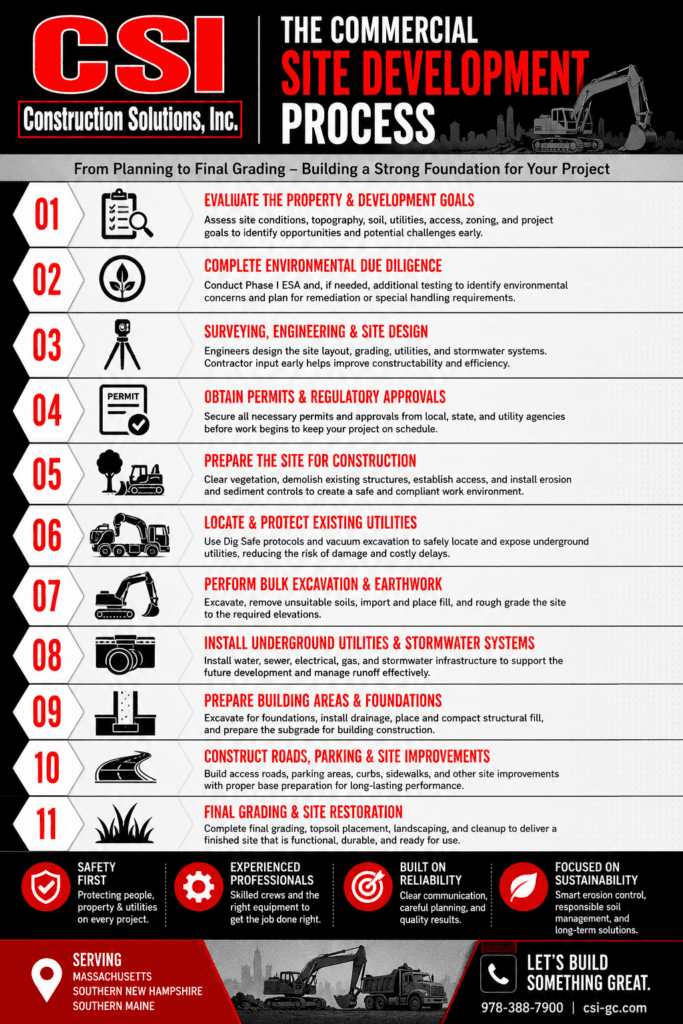
At Construction Solutions, Inc. (CSI), we provide commercial excavation and site work services throughout Massachusetts, Southern New Hampshire, and Southern Maine. This guide explains the typical commercial site development process and the importance of planning each phase before construction begins.
What Is Commercial Site Development?
Commercial site development is the process of preparing land and infrastructure for a commercial construction project.
Depending on the property and the proposed development, commercial site development may include:
- Property and site evaluation
- Environmental assessments
- Surveying and engineering
- Permitting and regulatory approvals
- Land clearing and demolition
- Earthwork and excavation
- Utility installation
- Stormwater management
- Drainage improvements
- Road and parking area preparation
- Foundation excavation
- Final grading and site restoration
Every commercial property is different. A relatively straightforward development may require basic clearing, grading, utilities, and foundation excavation.
A more complex project may involve contaminated soil management, groundwater concerns, extensive stormwater infrastructure, difficult site access, ledge removal, or coordination with multiple regulatory agencies and utility companies.
That is why successful commercial site development begins long before the first piece of equipment arrives on the property.

Step 1: Evaluate the Property and Development Goals
The first step in the commercial site development process is understanding both the property and the proposed project.
Before site work begins, the development team should evaluate factors such as:
- Property boundaries
- Existing structures
- Topography
- Soil conditions
- Wetlands and environmentally sensitive areas
- Existing utilities
- Road access
- Drainage patterns
- Zoning requirements
- Easements and restrictions
The proposed use of the property also plays an important role.
A commercial warehouse, retail development, municipal facility, office building, multifamily development, or industrial property may each have significantly different site requirements.
Early evaluation helps identify potential challenges before they become construction delays.

Why Early Site Evaluation Matters
Unexpected site conditions are one of the most common causes of delays and cost increases during construction.
For example, a project may encounter:
- Unsuitable soils
- Buried debris
- Unexpected utilities
- Contaminated soil
- High groundwater
- Poor drainage
- Ledge or difficult excavation conditions
Identifying potential issues during planning gives the project team more time to develop appropriate solutions.
For property owners and developers, this early planning stage can have a significant impact on the overall construction schedule and budget.
Step 2: Complete Environmental Due Diligence

Environmental due diligence is often an important part of commercial property development, particularly when purchasing or redeveloping an existing commercial or industrial property.
Depending on the property history and the requirements of the project, environmental investigations may include a Phase I Environmental Site Assessment (ESA).
A Phase I ESA is designed to identify potential recognized environmental conditions associated with a property.
If potential concerns are identified, additional investigation may be necessary.
This can include soil or groundwater testing and, in some cases, remediation planning.
Environmental Issues Can Affect the Construction Schedule
Environmental concerns should be addressed as early as possible.
Excavation on a property with contaminated soil or other environmental concerns may require:
- Soil characterization
- Material segregation
- Specialized handling procedures
- Transportation and disposal coordination
- Regulatory oversight
- Documentation and reporting
Trying to address these issues after major excavation has already begun can create significant delays.
For redevelopment projects throughout Massachusetts and New England, environmental planning should be coordinated with the overall site development strategy whenever possible.
You Can Learn more about this with our resource guides:

Step 3: Surveying, Engineering, and Site Design
Once the property has been evaluated, the project typically moves into surveying and engineering.
Civil engineers and other design professionals develop plans for the site based on the proposed development and applicable regulations.
Commercial site plans may address:
- Building location
- Property access
- Parking areas
- Driveways
- Utility connections
- Stormwater management
- Drainage systems
- Grading
- Retaining structures
- Erosion and sediment control
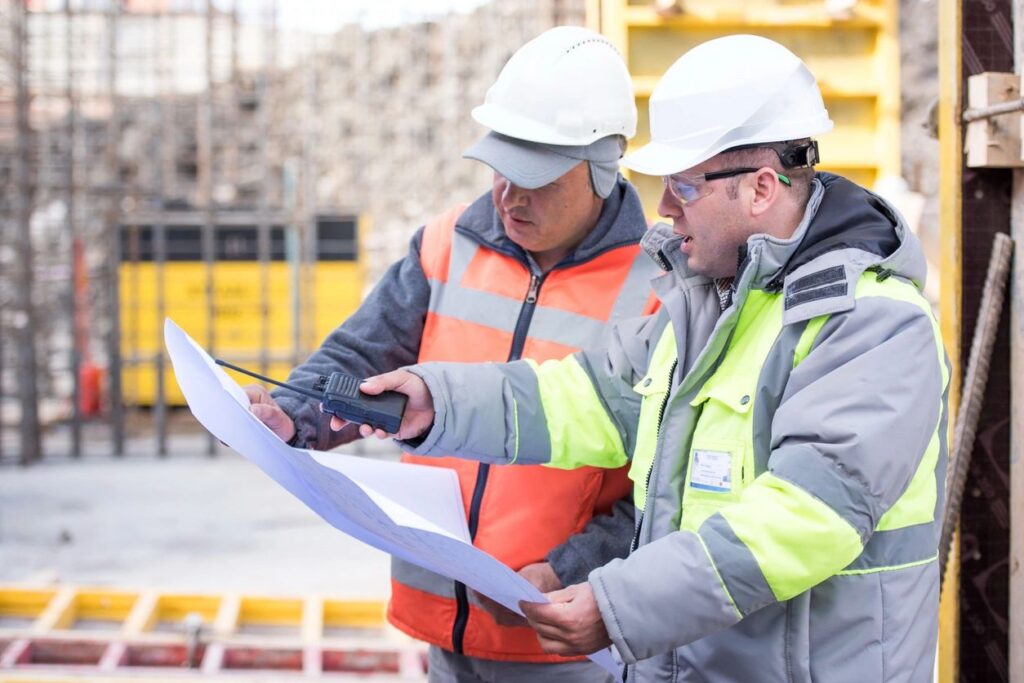
The site contractor plays an important role during this stage by reviewing plans from a constructibility perspective.


Why Contractor Input Can Be Valuable Early
Experienced site contractors may identify practical considerations related to:
- Equipment access
- Excavation sequencing
- Material handling
- Existing site constraints
- Utility conflicts
- Soil management
- Dewatering requirements
Early coordination between the owner, engineer, general contractor, and site contractor can help reduce conflicts once construction begins.
Step 4: Obtain Permits and Regulatory Approvals
Commercial development projects often require multiple permits and approvals before site work can begin.
Requirements vary depending on the property location, project size, and environmental conditions.
Depending on the project, approvals may involve:
- Local planning boards
- Conservation commissions
- Building departments
- Public works departments
- State environmental agencies
- Utility companies
- Other regulatory authorities
Projects in Massachusetts may also need to comply with state environmental and stormwater requirements.
Permitting Should Be Built Into the Project Schedule
Permitting is not simply an administrative step.
Approval timelines can directly affect the construction schedule.
Property owners and developers should account for:
- Application preparation
- Engineering revisions
- Public hearings
- Agency review periods
- Permit conditions
Starting site work before required approvals are in place can create serious complications.
A well-developed project schedule should account for permitting and regulatory review before mobilization.
Step 5: Prepare the Site for Construction
Once approvals are in place, physical site development can begin.
The first stage of construction often involves preparing the property for excavation and development.
This may include:
- Mobilizing equipment
- Installing erosion controls
- Establishing construction access
- Clearing vegetation
- Removing trees and brush
- Demolishing existing structures
- Removing unsuitable materials
Site preparation creates the working conditions necessary for the larger excavation and construction phases.


Erosion and Sediment Control
Protecting surrounding properties and waterways is an important part of commercial site development.
Temporary erosion and sediment control measures may be installed before significant earth disturbance begins.
These measures help manage:
- Soil erosion
- Sediment runoff
- Stormwater movement
- Construction-related impacts
Controls must often be maintained and adjusted as construction progresses.
You can learn more with our resource guide: Erosion Control and Stormwater Management for New England Projects]
Step 6: Locate and Protect Existing Utilities
Before excavation begins, existing underground utilities must be properly identified.
Commercial sites may contain a complex network of:
- Electrical lines
- Gas lines
- Water services
- Sewer lines
- Storm drainage
- Telecommunications infrastructure
- Fiber optic lines
Utility information shown on plans may not always provide the exact horizontal or vertical location of underground infrastructure.
Learn more about advanced DigSafe protocols in our resource guide, “Beyond the Marks : Advanced Dig Safe Protocols for Safe Excavation in Massachusetts.”


Vacuum Excavation and Utility Daylighting
When utility locations need to be verified, vacuum excavation can provide a controlled method of exposing underground utilities.
Hydro excavation or air excavation may be used to carefully remove soil around buried infrastructure.
This process, often called utility daylighting, helps contractors visually confirm the location and depth of utilities before conventional excavation continues.
Vacuum excavation can be especially valuable on commercial projects involving:
- Congested utility corridors
- Existing facilities
- Utility crossings
- Tight work areas
- Infrastructure upgrades
Proper utility coordination is essential for protecting workers, infrastructure, and the project schedule.
You can learn more about this process with our resources and service page:
Step 7: Perform Bulk Excavation and Earthwork
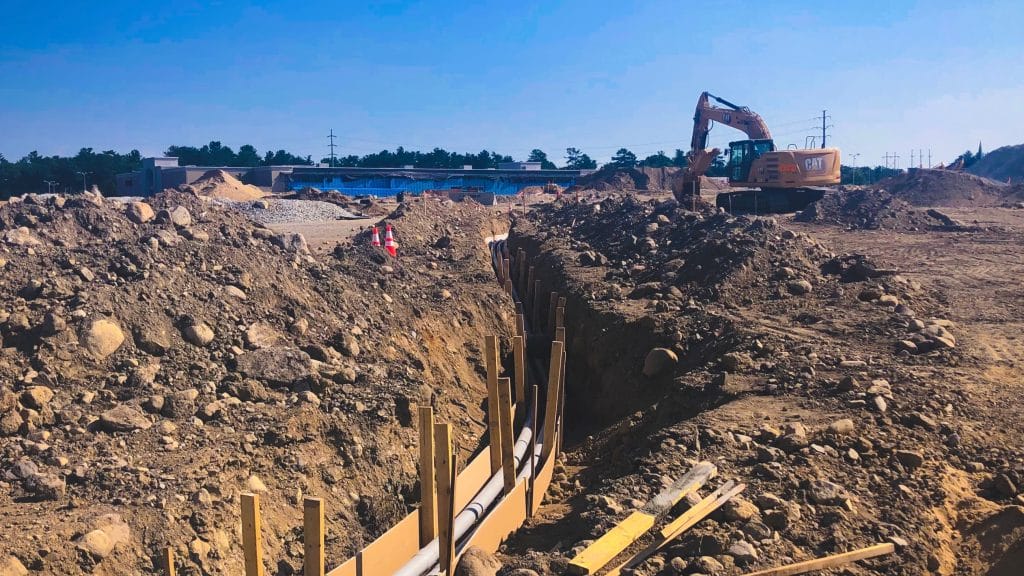
Bulk excavation is one of the most significant phases of commercial site development.
During this stage, the site is shaped according to the approved grading and construction plans.
Work may include:
- Cut and fill operations
- Removal of unsuitable soil
- Importing structural fill
- Rough grading
- Ledge removal
- Foundation excavation
- Material stockpiling
The goal is to create the required elevations and prepare the property for utilities, foundations, roads, parking areas, and other improvements.

Soil Management Is Critical
Managing soil properly can significantly affect project costs.
A commercial site development project may involve different material types, including:
- Reusable native material
- Structural fill
- Unsuitable soil
- Excess material
- Potentially contaminated material
Separating and managing these materials properly can help avoid unnecessary hauling and disposal costs.
Step 8: Install Underground Utilities and Infrastructure
Once excavation and initial grading are underway, underground infrastructure can be installed.
Commercial utility work may include:
- Water services
- Sewer systems
- Storm drainage
- Electrical infrastructure
- Telecommunications
- Gas services
The sequence of utility installation is important.
Different systems may need to be installed at specific elevations and coordinated with future building construction.

Stormwater Management
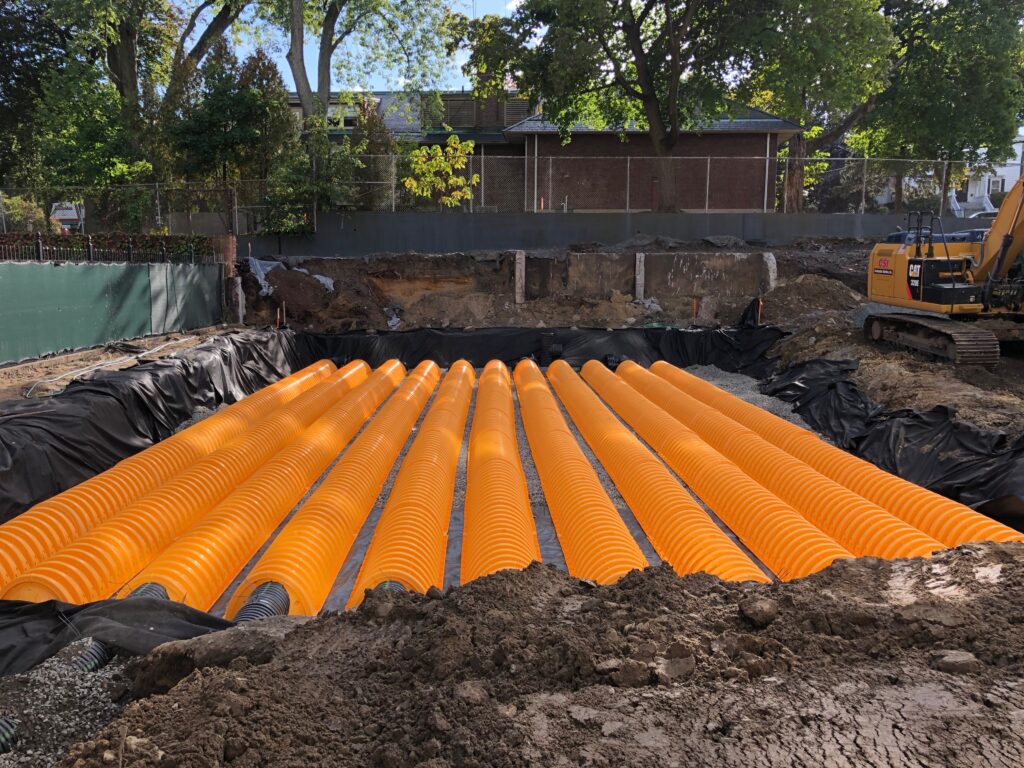
Stormwater infrastructure is a major consideration for many commercial developments.
Depending on the project, systems may include:
- Catch basins
- Drainage piping
- Detention systems
- Infiltration systems
- Underground stormwater structures
- Swales and drainage channels
Proper installation and grading are essential to ensure that stormwater moves and is managed as designed.
Poor drainage can lead to:
- Standing water
- Erosion
- Pavement damage
- Foundation concerns
- Long-term maintenance problems
Step 9: Prepare Building Areas and Foundations
As the site develops, excavation shifts toward preparing the building area.
This may include:
- Foundation excavation
- Footing excavation
- Subgrade preparation
- Structural fill placement
- Compaction
- Foundation drainage
The site contractor must coordinate closely with the general contractor and foundation team to maintain the construction schedule.
Proper elevations are particularly important.
Even small errors in excavation depth or grading can create problems later in the construction process.

Step 10: Construct Roads, Parking Areas, and Site Improvements

After major underground infrastructure is complete, attention turns toward surface improvements.
Depending on the project, this may include preparation for:
- Access roads
- Parking lots
- Sidewalks
- Loading areas
- Curbs
- Site lighting
- Landscaping
Subgrade preparation and compaction are critical before pavement systems are installed.
A properly constructed base helps support the long-term performance of roads and parking areas.
Step 11: Final Grading and Site Restoration
The final stages of commercial site development involve completing the finished site.
This may include:
- Final grading
- Topsoil placement
- Landscaping preparation
- Drainage adjustments
- Site cleanup
- Restoration of disturbed areas
Final grading is especially important for directing surface water away from buildings and toward the appropriate drainage systems.
The finished site should function as a complete system, with building elevations, pavement, drainage, utilities, and landscaping working together as intended.
Common Challenges During Commercial Site Development
Even well-planned projects can encounter unexpected conditions.
Some common challenges may include:
Unforeseen Underground Utilities
Older properties may contain utilities that are poorly documented or no longer active.
Utility daylighting and careful excavation practices can help reduce the risk of damage.
Poor Soil Conditions
Unsuitable soils may need to be removed and replaced with properly engineered materials.
Groundwater
High groundwater can complicate excavation and foundation work.
Dewatering and drainage planning may be required.
Environmental Concerns
Contaminated soil or other environmental issues can require specialized handling and regulatory coordination.
Weather Delays
New England weather can significantly affect commercial site work.
Heavy rain, freezing temperatures, snow, and saturated ground conditions can impact excavation and earthwork schedules.
Planning for seasonal conditions is an important part of project management throughout Massachusetts, Southern New Hampshire, and Southern Maine.
How to Keep a Commercial Site Development Project on Schedule
Commercial site development requires coordination between multiple professionals and contractors.
The most successful projects typically have a clear plan for communication and sequencing.
Early site evaluation can identify potential challenges before construction begins.
Start Planning Early
Coordinate the Project Team
Owners, engineers, general contractors, environmental professionals, utility companies, and site contractors should communicate throughout the project.
Review Site Conditions Regularly
Field conditions do not always match plans or previous assumptions.
Regular site reviews help identify changes early.
Protect Existing Infrastructure
Careful utility locating and daylighting can help prevent costly damage and service interruptions.
Plan for Material Management
Understanding where excavated material will be reused, stored, transported, or disposed of can help control costs.

Work With an Experienced Site Contractor
Commercial site development involves more than moving dirt.
The work requires an understanding of:
- Site plans
- Grades and elevations
- Underground utilities
- Drainage systems
- Soil conditions
- Construction sequencing
- Regulatory requirements
Choosing a contractor with experience in complex commercial site work can make a significant difference in project efficiency.
Commercial Site Development in Massachusetts and New England
Commercial development in New England presents unique challenges.
Projects throughout Massachusetts, Southern New Hampshire, and Southern Maine may involve:
- Rocky soils and ledge
- Older underground infrastructure
- Tight urban and developed sites
- Wetland considerations
- Strict stormwater requirements
- Seasonal weather conditions
- Environmental redevelopment concerns
Every site requires its own approach.
A successful site development strategy considers both the approved construction plans and the actual conditions encountered in the field.

Partner With Construction Solutions, Inc. for Commercial Site Development
Construction Solutions, Inc. provides commercial excavation and site work services for projects throughout Massachusetts, Southern New Hampshire, and Southern Maine.
Our team understands the importance of proper planning, communication, and execution throughout the site development process.
Our commercial site services include:
- Site preparation
- Commercial excavation
- Land clearing
- Grading and earthwork
- Utility excavation
- Drainage installation
- Stormwater infrastructure
- Foundation excavation
- Vacuum excavation and utility daylighting
- Site restoration
Whether you are preparing a property for new construction, redeveloping an existing commercial site, or coordinating infrastructure improvements, the site development process requires careful planning from the beginning.
Working with experienced professionals and addressing site conditions early can help reduce delays and create a stronger foundation for the entire project.

Planning a Commercial Development Project?
If you are planning commercial excavation, site development, utility work, or drainage improvements in Massachusetts, Southern New Hampshire, or Southern Maine, Construction Solutions, Inc. can help.
Contact our team to discuss your project and the site work required to move it forward.