

Table of contents
- Why Effective Water Management is Important
- Why Sloped Lots Create Drainage Problems
- Start With the Source of the Water
- Grading: One of the Most Important Drainage Solutions
- French Drains and Subsurface Drainage
- Swales for Managing Surface Runoff
- Catch Basins and Surface Drainage
- Foundation Drainage and Waterproofing
- Retaining Walls and Drainage
- Erosion Control on Sloped Properties
- Why New England Properties Require Site-Specific Drainage Planning
- Drainage Solutions During New Construction
- What Homeowners Should Look For
- Professional Drainage, Excavation & Grading for Sloped Lots

Why Effective Water Management is Important
Sloped properties can offer beautiful views, natural elevation changes, and unique opportunities for residential construction. They can also create serious drainage challenges when stormwater and groundwater are not properly managed.
For homeowners in Massachusetts and throughout New England, drainage problems on sloped lots can become particularly complicated because of changing seasons, heavy rainfall, snowmelt, freeze-thaw cycles, varying soil conditions, ledge, and the age and layout of existing properties.
Water naturally follows the path of least resistance. On a sloped property, that can mean runoff traveling toward a foundation, collecting behind a retaining wall, eroding a hillside, saturating a lawn, or moving toward neighboring properties.
The right drainage solution is rarely about simply installing a pipe or digging a trench. Effective drainage begins with understanding where the water is coming from, where it is going, how the property is graded, and what can be done to safely control that water before it causes damage.
Construction Solutions, Inc. provides excavation, grading, site work, drainage, and related solutions for residential and commercial properties throughout Massachusetts, Southern New Hampshire, and Southern Maine.
Why Sloped Lots Create Drainage Problems
Every property has its own drainage characteristics, but slopes can significantly increase the speed and volume of surface runoff.
During a heavy New England rainstorm, water moving down a slope can quickly gain momentum. If the soil cannot absorb the runoff quickly enough, water begins traveling across the surface.
This can create problems such as:
- Standing water around the home
- Saturated lawns and landscaping
- Soil erosion
- Washouts along slopes
- Exposed roots
- Mud and sediment movement
- Water collecting near foundations
- Hydrostatic pressure against foundation walls
- Basement or crawlspace moisture
- Drainage problems around retaining walls
- Damage to driveways and walkways
- Runoff entering neighboring properties
Snowmelt can create another challenge. Frozen ground may prevent water from infiltrating normally, causing melting snow to move across the surface instead.
For homeowners in Eastern Massachusetts and the North Shore, these seasonal conditions make proper drainage planning particularly important.
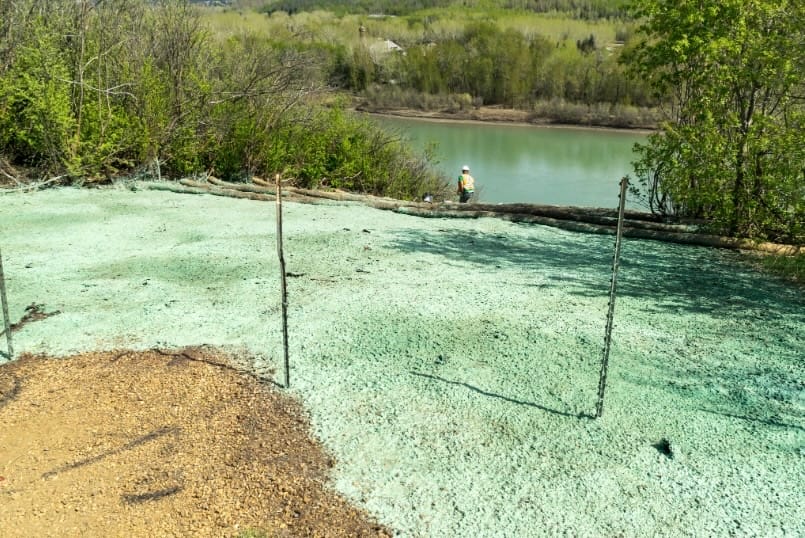
Start With the Source of the Water

One of the most important parts of solving a drainage problem is identifying the source.
Water affecting a sloped property may come from:
- Rainfall
- Roof runoff
- Downspouts
- Melting snow
- Groundwater
- Poor surface grading
- Water flowing from an adjacent property
- Impervious surfaces such as driveways and patios
- Failed or undersized drainage systems
A drainage system designed without identifying the source can address the symptom without correcting the underlying problem.
For example, installing a drain at the bottom of a slope may collect some water, but if the real problem is uncontrolled runoff coming from higher ground, the property may continue experiencing erosion and saturation.
A proper site evaluation looks at the entire drainage pattern rather than focusing on one wet area.
Grading: One of the Most Important Drainage Solutions
Proper grading is often one of the most effective ways to manage water around a property.
The objective is to establish elevations and drainage paths that move water away from structures and toward an appropriate discharge or collection point.
On a sloped lot, grading may involve:
- Reworking existing elevations
- Creating positive drainage away from foundations
- Building controlled drainage swales
- Redirecting surface runoff
- Correcting low areas
- Stabilizing slopes
- Adjusting soil elevations around additions or new construction
- Integrating grading with driveways, walkways, and landscaping
Grading should be approached carefully. Simply moving water away from one location can sometimes create a problem somewhere else.
A successful drainage plan considers the complete flow path.

French Drains and Subsurface Drainage
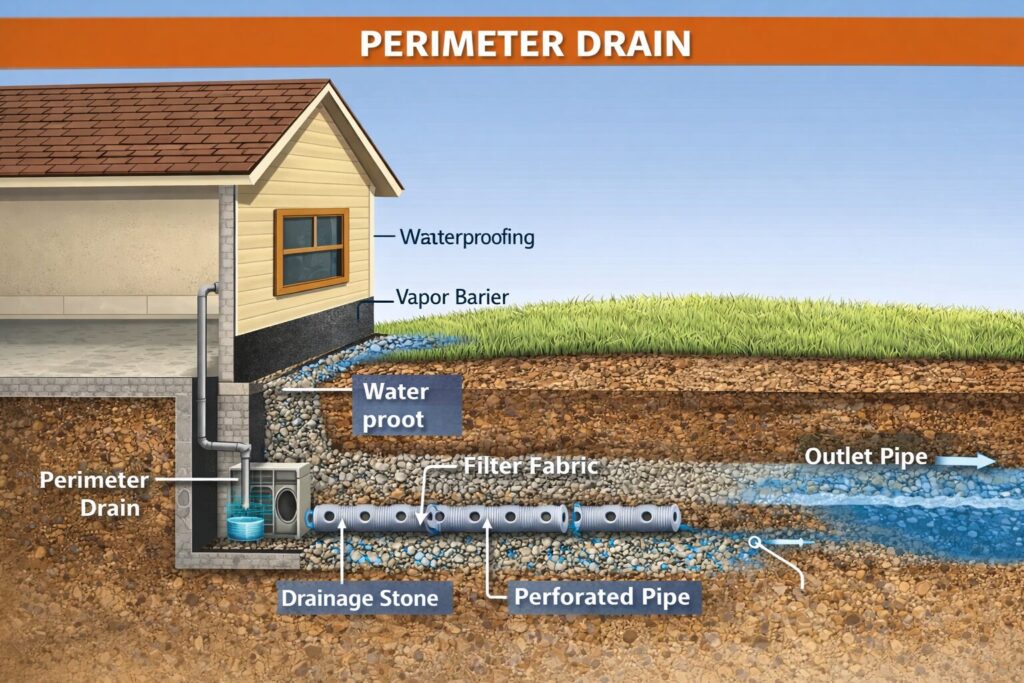
When water is moving through or collecting beneath the surface, a subsurface drainage system may be appropriate.
French drains and similar systems can intercept groundwater or infiltrating surface water and direct it toward a suitable discharge location.
A typical system may include:
- Excavation of the drainage trench
- Proper trench slope
- Drainage stone
- Perforated drainage pipe
- Appropriate filter fabric where conditions require it
- Proper connection or discharge
- Backfill and surface restoration
The design and installation details matter.
A drainage pipe that is improperly sloped, undersized, clogged, or discharged incorrectly may not solve the underlying drainage problem.
Swales for Managing Surface Runoff
A drainage swale is a shallow, graded channel designed to guide surface water.
Swales can be especially useful on properties where runoff needs to be redirected across or around a slope.
Rather than allowing water to travel uncontrolled down a hillside, a properly designed swale can provide a defined path for runoff.
Depending on the property, a swale may be combined with:
- Grading
- Drainage stone
- Vegetation
- Erosion-control materials
- Catch basins
- Underground drainage piping
The appropriate solution depends on the property’s slope, soil, available space, and discharge conditions.

Catch Basins and Surface Drainage

Some drainage problems are caused by concentrated surface water.
Catch basins can collect runoff from areas such as:
- Driveways
- Walkways
- Low points in yards
- Parking areas
- Patios
- Areas around buildings
The collected water can then be directed through an appropriately designed drainage system.
On a sloped property, placement is particularly important because water can travel quickly toward collection points.
Foundation Drainage and Waterproofing
One of the biggest concerns with poor drainage around a sloped property is what happens when water begins collecting near the foundation.
Excessive water around a foundation can contribute to:
- Basement moisture
- Water infiltration
- Hydrostatic pressure
- Damp crawlspaces
- Efflorescence
- Foundation deterioration
- Problems with finished basement spaces
Drainage and waterproofing often need to be considered together.
Depending on the situation, solutions may include exterior grading, foundation drainage, footing drainage, waterproofing, downspout management, or excavation around the foundation.
If excavation is required near an existing structure, the work should be carefully planned to account for the foundation, utilities, access limitations, and surrounding site conditions.
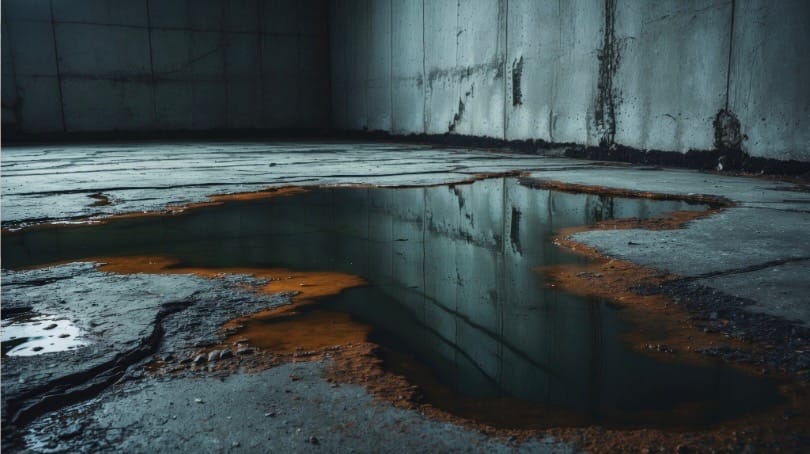
Retaining Walls and Drainage

Retaining walls can be an important component of a sloped property, but they also have their own drainage requirements.
Water that collects behind a retaining wall can create significant pressure.
Proper wall drainage may incorporate systems such as:
- Drainage stone
- Perforated pipe
- Filter fabric
- Drainage outlets
- Proper backfill
- Surface-water management
Simply replacing or repairing a retaining wall without addressing the water behind it may leave the underlying problem unresolved.
For this reason, drainage should be considered whenever a retaining wall is being installed, repaired, or replaced.
Erosion Control on Sloped Properties
Drainage and erosion are closely connected.
When runoff travels too quickly across exposed soil, it can carry sediment downhill and progressively cut channels into the slope.
Early signs of erosion can include:
- Small rills or channels
- Exposed roots
- Washed-out soil
- Accumulated sediment
- Bare areas on a slope
- Undercutting near structures or landscaping
Erosion-control measures can include grading, vegetation, drainage improvements, stabilization materials, swales, retaining structures, and controlled water discharge.
The goal is not simply to stop erosion after it occurs. Good site planning attempts to control water before it gains enough velocity to damage the slope.
Why New England Properties Require Site-Specific Drainage Planning
There is no single drainage solution that works for every property.
New England properties can have dramatically different soil and site conditions, even between neighboring properties.
A drainage plan may need to account for:
- Clay or compacted soils
- Sandy soils
- Loam
- Ledge and shallow bedrock
- Existing drainage infrastructure
- Mature landscaping
- Older foundations
- Steep grades
- Limited access
- Neighboring properties
- Seasonal groundwater
- Heavy precipitation
- Snow and ice
- Freeze-thaw conditions
Properties throughout the North Shore and Eastern Massachusetts can also have a mixture of older homes, additions, paved surfaces, retaining walls, and established landscaping that make drainage work more complicated than a new construction site.
That is why drainage work should begin with an evaluation of the property rather than selecting a drainage product first.

Drainage Solutions During New Construction
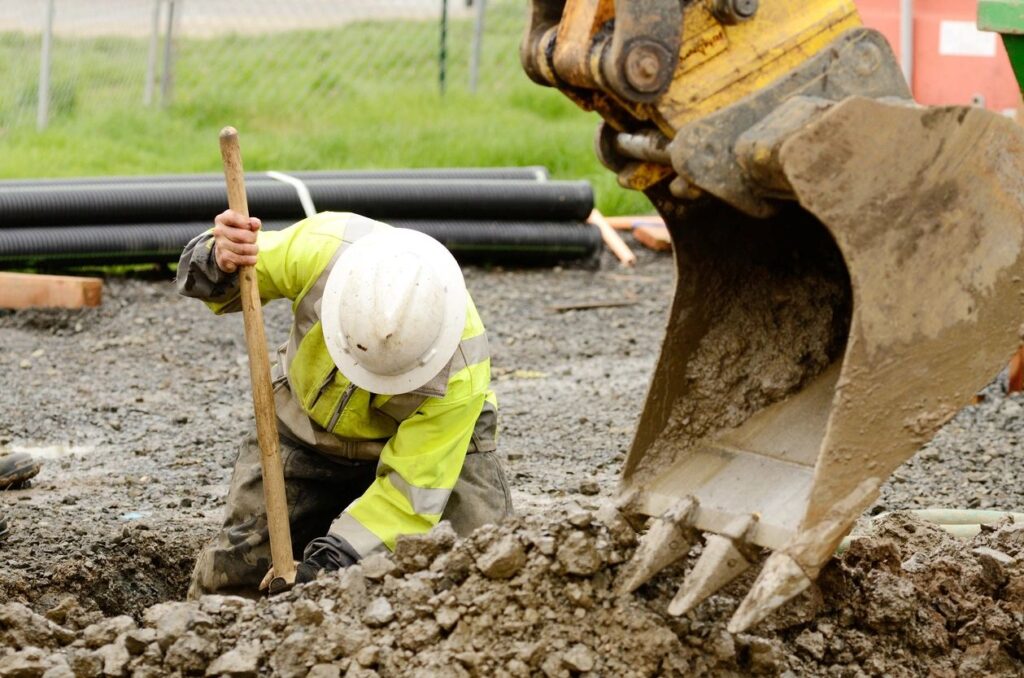
Drainage should ideally be considered before construction begins.
When building a new home, addition, garage, driveway, or other structure on a sloped property, the excavation and grading plan can be developed around the property’s natural elevations.
This provides an opportunity to coordinate:
- Site clearing
- Excavation
- Foundation excavation
- Rough grading
- Final grading
- Drainage
- Erosion control
- Driveway installation
- Utility installation
- Landscaping
Addressing drainage during site development can be considerably more effective than attempting to correct water problems after a property has already been built.
What Homeowners Should Look For
If you own a sloped property, pay attention to changes in how water moves across your property.
Warning signs can include water collecting near the foundation, muddy areas that remain saturated, new erosion channels, exposed soil, retaining-wall movement, basement moisture, or water consistently flowing toward your home.
These issues do not necessarily mean that you need an extensive drainage system.
Sometimes the solution is a grading correction or downspout modification. Other properties may require a combination of surface and subsurface drainage, erosion control, excavation, or foundation waterproofing.
The important first step is determining why the water is going where it is going.
Professional Drainage, Excavation & Grading for Sloped Lots
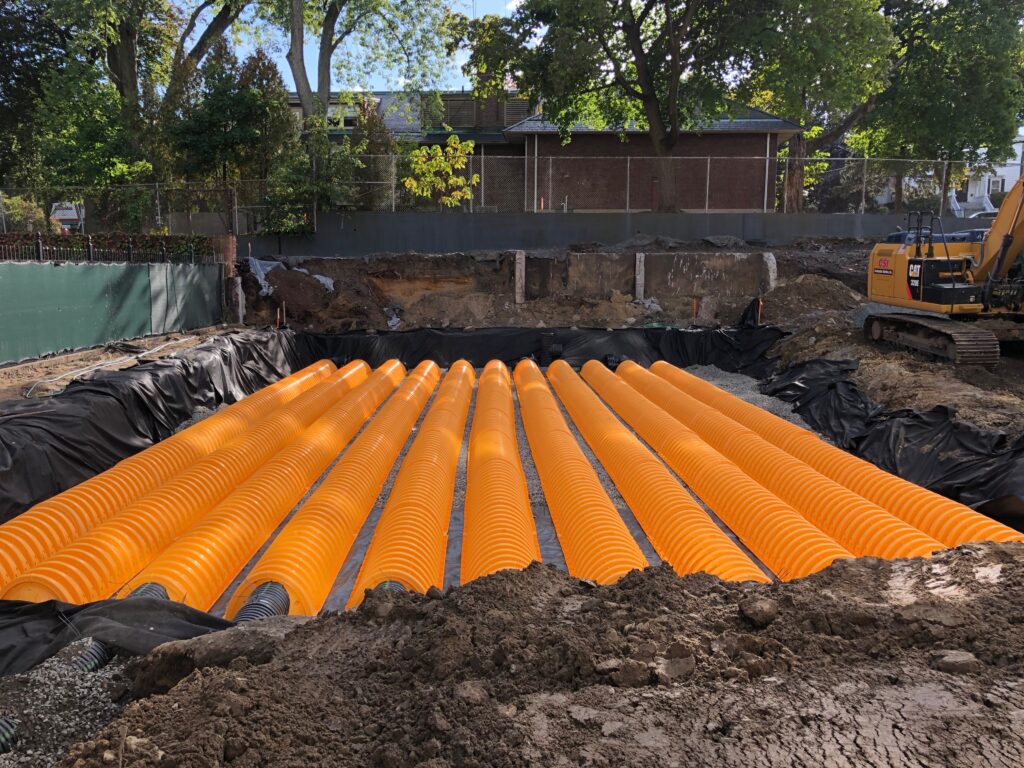
Drainage problems on sloped properties often involve more than water alone. They can involve grading, excavation, soil conditions, foundations, retaining walls, utilities, erosion, and the overall layout of the property.
Construction Solutions, Inc. approaches drainage projects as part of the larger site rather than treating one wet spot in isolation.
Our excavation and site-work capabilities allow drainage improvements to be coordinated with grading, foundation work, retaining walls, erosion control, and other site improvements when appropriate.
We serve property owners and contractors throughout Massachusetts, Southern New Hampshire, and Southern Maine, including communities throughout Eastern Massachusetts and the North Shore.
If your property has persistent runoff, erosion, standing water, or drainage concerns, a site evaluation can help determine the most appropriate approach before the problem becomes more extensive.
Contact Construction Solutions, Inc. to discuss drainage, grading, excavation, and site-work solutions for your property.