
Table of contents
- Leading Cause of Foundation Failure
- Why Drainage Matters More Than You Think
- The Relationship Between Soil, Water, and Foundations
- How Poor Drainage Damages Foundations
- Key Drainage Systems That Protect Foundations
- Drainage During Site Preparation: Getting It Right From Day One
- Signs Your Property Has Drainage Problems
- Residential vs. Commercial Drainage Needs
- Why Professional Drainage Design Matters
- Build Strong by Managing Water
- Request a Site Visit

Leading Cause of Foundation Failure
When people think about building a strong foundation, they often focus on concrete strength, reinforcement, or footing depth.
While those elements matter, there’s another factor that plays an even bigger role in long-term structural integrity: proper drainage.
In New England’s climate—where heavy rain, snowmelt, freeze-thaw cycles, and high groundwater levels are common—poor drainage is one of the leading causes of foundation failure.
Whether you’re building a new home, expanding a commercial building, or managing an existing property, understanding drainage is critical to protecting your investment.
Why Drainage Matters More Than You Think
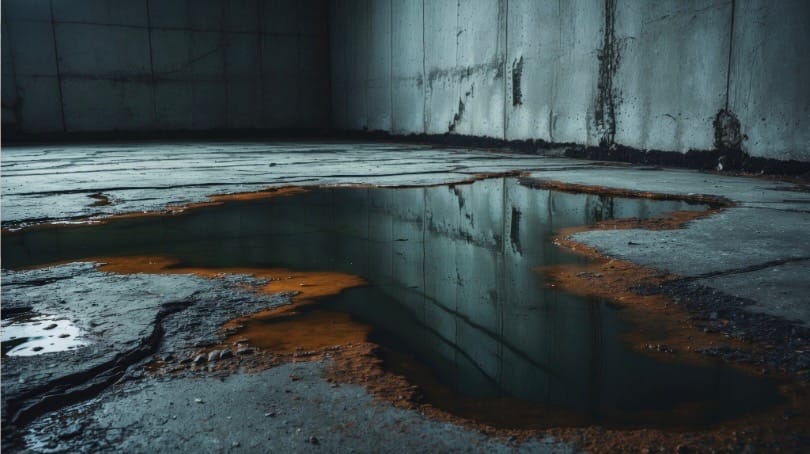
Water is relentless. If it has nowhere to go, it will push, seep, freeze, and expand—often against your foundation.
Without proper drainage, excess water can:
- Build up hydrostatic pressure against foundation walls
- Saturate soils and cause settlement
- Freeze and expand under slabs and footings
- Erode soil supporting the structure
- Find its way into basements and crawlspaces
A strong foundation isn’t just about what’s under the building—it’s about how water is managed around it.
The Relationship Between Soil, Water, and Foundations
Different soils behave very differently when exposed to water.
Common New England Soil Challenges:
- Clay soils retain water and expand, increasing pressure on foundations
- Silty soils hold moisture and weaken load-bearing capacity
- Sandy soils drain well but can erode without proper control
- Glacial till can trap water in unpredictable ways
Proper drainage design takes soil type into account to prevent movement, erosion, and long-term damage.

How Poor Drainage Damages Foundations
1. Hydrostatic Pressure
When water accumulates around a foundation, pressure builds against walls and slabs. Over time, this pressure can cause:
- Cracks in foundation walls
- Bowing or shifting walls
- Water infiltration
2. Soil Saturation & Settlement
Saturated soil loses its ability to support weight. This can lead to:
- Uneven settlement
- Cracked foundations
- Doors and windows going out of alignment
3. Freeze-Thaw Damage
In colder months, trapped water freezes and expands. This movement:
- Stresses concrete and footings
- Worsens existing cracks
- Damages slabs and walkways
Key Drainage Systems That Protect Foundations
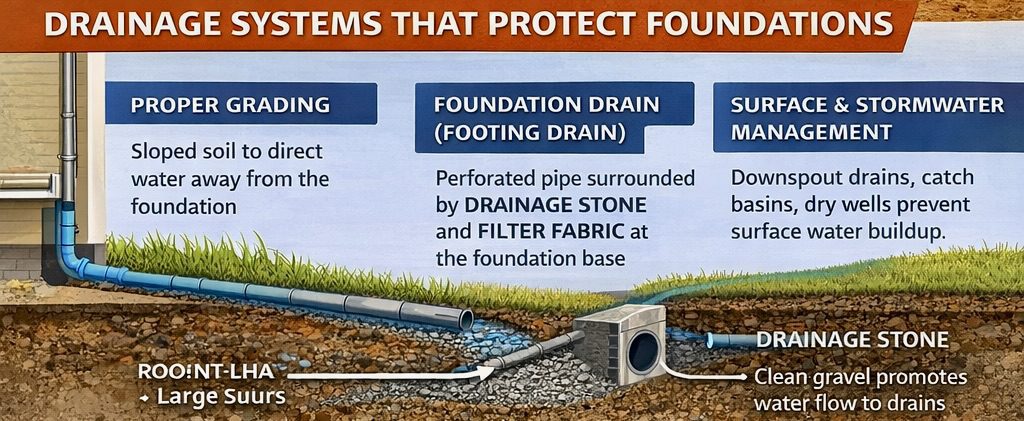
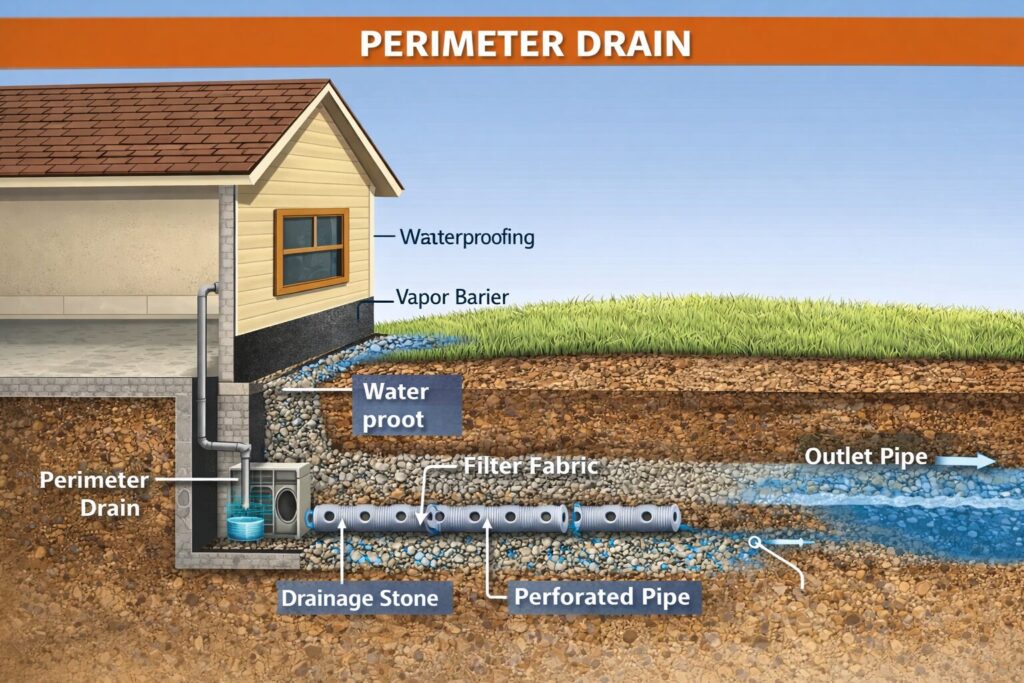
1. Foundation Drainage (Perimeter Drains)
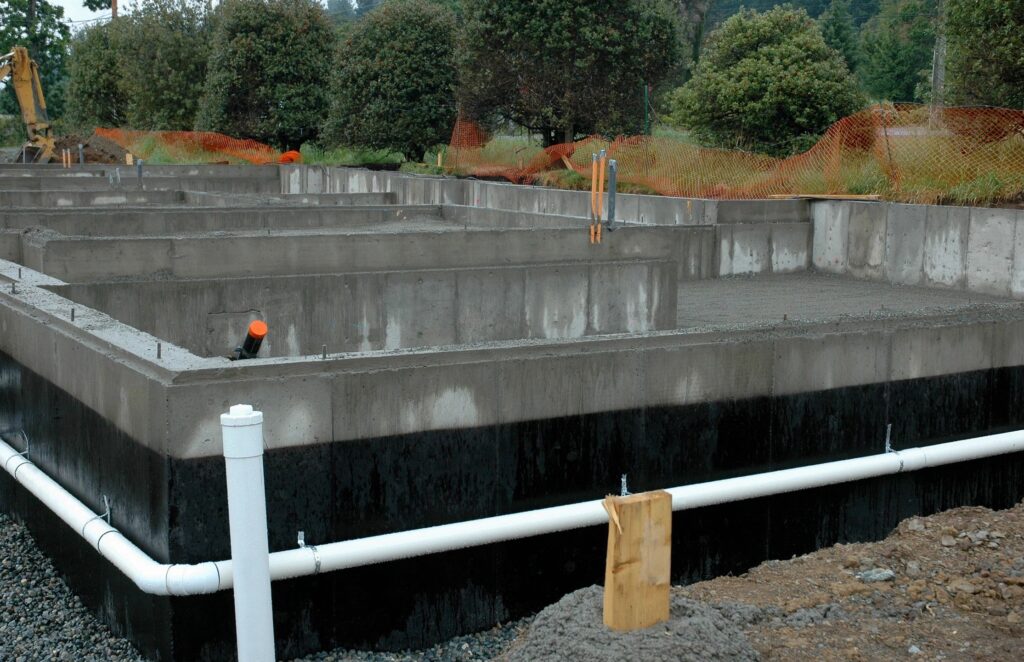
Installed at the base of the foundation, footing drains collect groundwater and redirect it away from the structure.
2. Surface Drainage & Grading
Proper grading ensures water flows away from the foundation—not toward it. Even small slope errors can cause major issues.
3. Drainage Stone & Filter Fabric
Stone promotes water movement while filter fabric prevents soil clogging, ensuring long-term performance.
4. Stormwater Management Systems
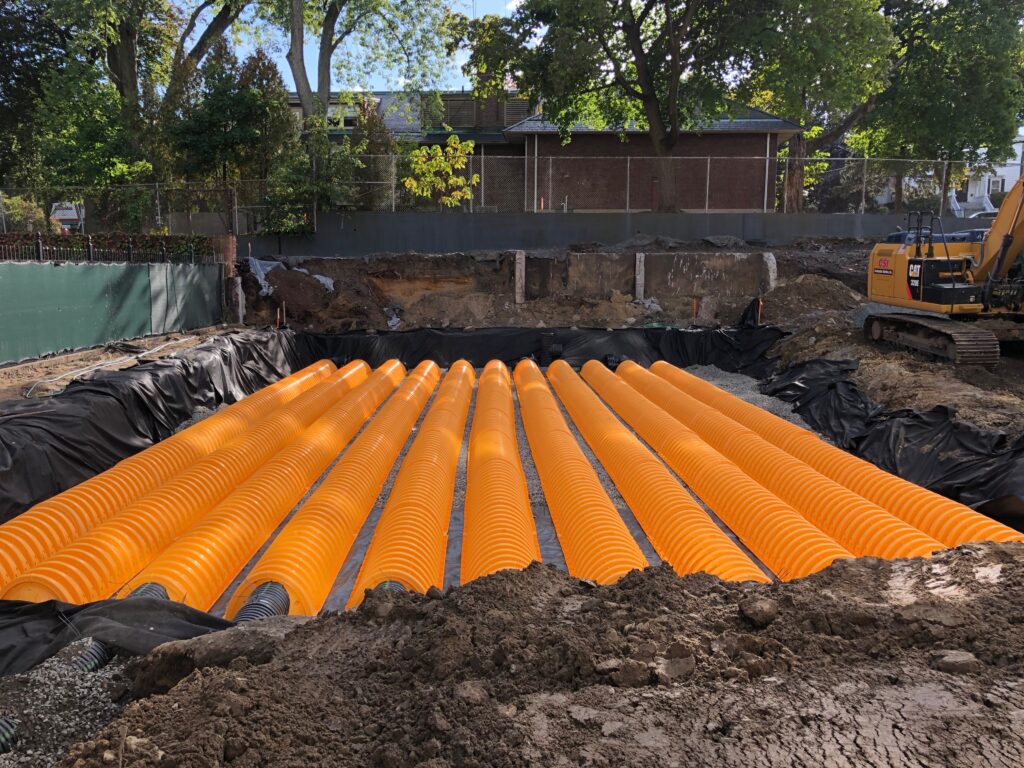
Catch basins, dry wells, and detention systems manage runoff from roofs, parking areas, and hardscape.
5. Sub-Slab Drainage
Installed beneath slabs to relieve pressure and prevent moisture intrusion—often combined with vapor barriers.
Drainage During Site Preparation: Getting It Right From Day One
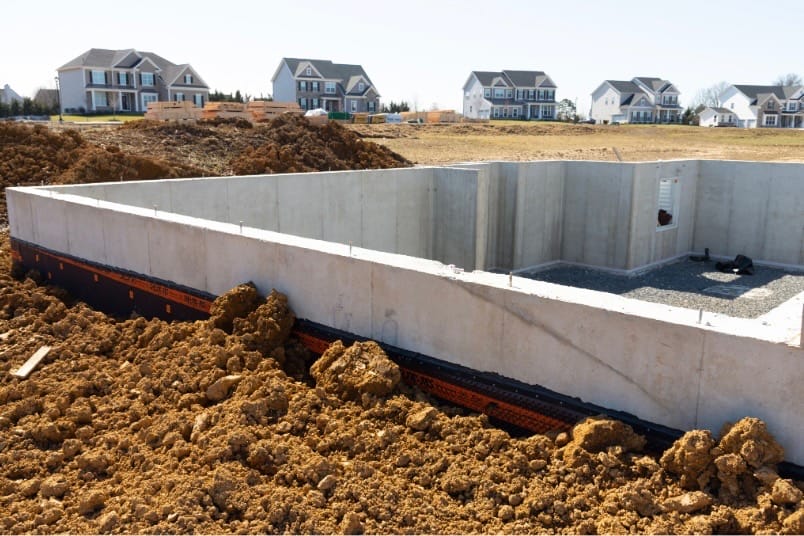
The best time to address drainage is before construction begins.
During site preparation, an experienced contractor will:
- Evaluate soil and groundwater conditions
- Establish proper elevations and slopes
- Design drainage routes before foundations are poured
- Install underground drainage systems prior to backfill
Trying to “fix” drainage after construction can be done. It is a disruptive and can be more costly after the initial construction phase has been completed.
Signs Your Property Has Drainage Problems
If you already have a building, watch for these warning signs:
- Water pooling near the foundation
- Damp or musty basements
- Efflorescence (white residue) on foundation walls
- Cracks in concrete or masonry
- Standing water after rain or snowmelt
These symptoms often indicate drainage issues—not foundation failure yet—but ignoring them can lead there.
To learn more about the signs you many have foundation problems, we recommend reading “Signs You Might Need Foundation Repairs – What New England Homeowners Should Know“

Residential vs. Commercial Drainage Needs

Residential Properties
- Focus on foundation protection and basement moisture control
- Often include footing drains, grading, and downspout management
Commercial Properties
- Require engineered stormwater systems
- Must handle larger roof and pavement runoff
- Often include detention ponds, catch basins, and underground piping
In both cases, drainage is essential to structural longevity and regulatory compliance.
Why Professional Drainage Design Matters
Improper drainage installation can be just as harmful as no drainage at all.
A professional contractor ensures:
- Correct slope and pipe placement
- Proper materials and compaction
- Compliance with local and state regulations
- Long-term performance in New England conditions
Cutting corners on drainage often leads to costly repairs years later.
Build Strong by Managing Water
A strong foundation isn’t just about concrete and steel—it’s about controlling water.
Proper drainage protects your foundation, extends the life of your structure, and prevents expensive damage down the road.
At Construction Solutions, Inc., we specialize in site preparation, excavation, drainage systems, and foundation support throughout Massachusetts, Southern New Hampshire, and Southern Maine.
We understand local soil conditions, weather challenges, and best practices to keep your foundation solid for decades.
Learn more about excavation & site work