

Table of contents
- The Role of Dig Safe
- What Dig Safe Does, and What it Doesn’t Do
- When Utility Locating Isn’t the Same as Utility Exposure
- Beyond the Marks: Why Advanced Utility Verification Matters
- The Tolerance Zone Requires Special Attention
- Vacuum Excavation for Utility Daylighting
- An Advanced Dig Safe Protocol for Commercial & Municipal Projects
- Why Utility Depth Should Never Be Assumed
- Advanced Dig Safe Planning for Municipalities & Commercial Properties
- What Contractors Should Do When They Find an Unknown Utility
- Beyond Compliance: Building a Better Excavation Process
- When Vacuum Excavation Makes Sense
- Partnering With an Experienced Vacuum Excavation Contractor
- Final Takeaway: Dig Safe is the Beginning
- Planning excavation near existing underground utilities?

The Role of Dig Safe
Dig Safe is the starting point for safe excavation, not the end of the process.
For contractors, municipalities, developers, commercial property owners, and facility managers, underground utility safety requires more than obtaining a Dig Safe ticket and looking for paint and flags.
On complex construction sites, and developments in New England sites, excavation often requires additional planning, verification, communication, and controlled exposure of underground facilities.
Massachusetts requires excavators to contact Dig Safe before excavation. The state’s requirements generally include at least 72 business hours of advance notice, and the Dig Safe ticket is generally valid for 30 days. Massachusetts also defines excavation broadly, including activities such as grading, backfilling, and demolition. (Massachusetts Government).
But once the utilities have been marked, the next question is:
How do you safely excavate around what is underground?
That is where advanced excavation planning, utility verification, and vacuum excavation can make a significant difference.

What Dig Safe Does, and What it Doesn’t Do

One of the most important concepts for any excavation project is understanding what a Dig Safe ticket actually accomplishes.
Dig Safe is a notification service. It notifies participating utility companies about planned excavation so the appropriate utility owners or their locating contractors can mark their facilities. Dig Safe itself does not physically locate or mark underground utilities. (Dig Safe)
The markings provide critical information, but they should not be treated as a substitute for careful excavation practices.
There may also be private underground utilities that are not marked through the standard Dig Safe process. Examples can include privately owned electric, gas, irrigation, lighting, or other underground facilities. These may require separate private locating. (Dig Safe)
For commercial properties, campuses, industrial facilities, municipalities, and developed sites, identifying both public and private utilities should be part of the pre-excavation planning process.
When Utility Locating Isn’t the Same as Utility Exposure
A locating service can help identify the anticipated horizontal position of a utility.
Vacuum excavation can physically expose the utility so the project ream can verify its actual location, depth, alignment and relationship to the proposed excavation.
Those are different services, serving different stages of a project.

Beyond the Marks: Why Advanced Utility Verification Matters
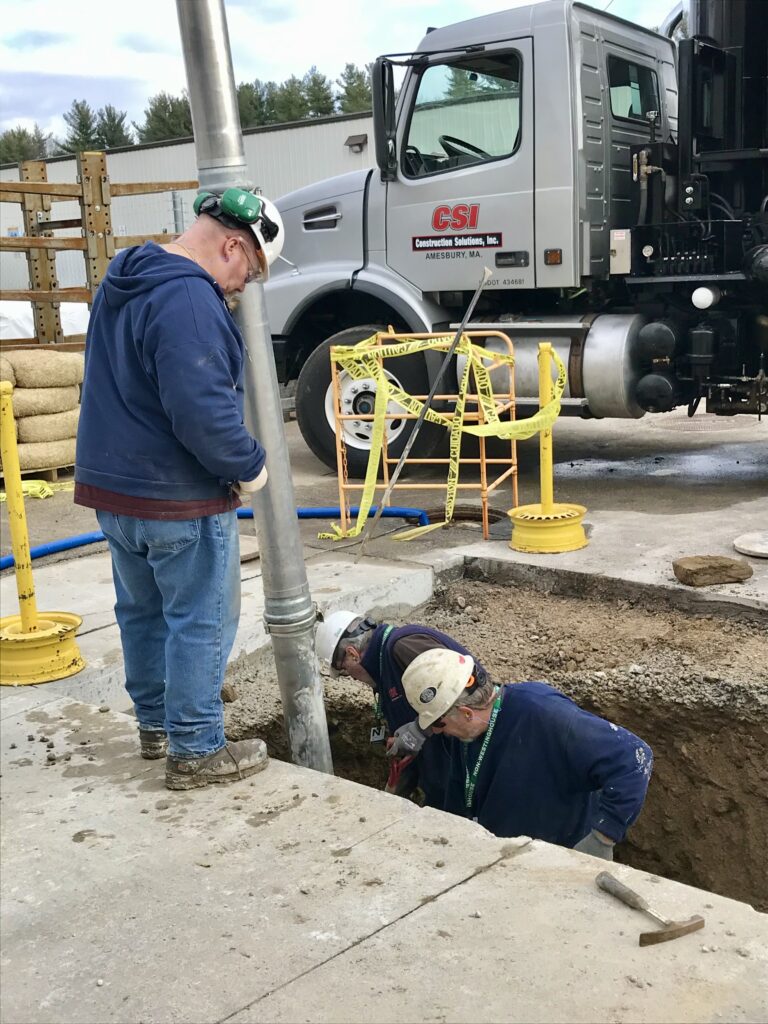
Utility markings identify the approximate location of underground facilities, but the actual depth, alignment, configuration, and condition of a utility can vary.
Dig Safe guidance specifically cautions excavators not to assume that an underground facility is installed at a particular depth. Changes in grade, erosion, previous construction, and other site conditions can alter the amount of cover over a utility. (Dig Safe)
That becomes particularly important when excavation:
- Crosses an existing utility
- Runs parallel to a utility
- Occurs near gas or petroleum lines
- Takes place around electrical infrastructure
- Requires deep excavation
- Occurs in a congested utility corridor
- Involves an older developed property
- Takes place near existing buildings
- Requires new utility connections
- Involves municipal infrastructure
- Includes roadway or commercial site work
In these situations, knowing where a utility is marked is different from knowing exactly where it is located in three dimensions.
That distinction is where advanced utility exposure becomes valuable.
The Tolerance Zone Requires Special Attention
Massachusetts excavation work near marked utilities requires additional care.
Dig Safe guidance identifies an 18-inch tolerance zone around underground facilities, and current excavator guidance states that powered equipment should not be used within the tolerance zone before the facility has been appropriately verified. (Dig Safe)
The objective is straightforward:
Do not rely on assumptions when excavation gets close to an underground facility. Expose and verify the facility before proceeding.
Current Dig Safe materials identify hand digging and vacuum excavation as methods for verifying marked facilities. For gas and liquid petroleum lines, the guidance specifically calls for verification by hand-dug test holes or vacuum excavation. (Dig Safe)

Vacuum Excavation for Utility Daylighting

Vacuum excavation provides a controlled way to expose underground utilities while reducing the risk associated with mechanical excavation.
Instead of relying on an excavator bucket to locate a buried line, vacuum excavation uses air or water to loosen soil while a powerful vacuum removes the material.
The process can be used to daylight utilities, expose them so their actual location, depth, direction, and configuration can be visually confirmed.
This can be particularly valuable for:
- Gas utilities
- Electrical infrastructure
- Water lines
- Sewer lines
- Communications infrastructure
- Utility crossings
- Congested commercial sites
- Municipal projects
- Roadway construction
- New utility installations
- Excavation near existing infrastructure
Dig Safe’s current excavator materials recognize vacuum excavation as an acceptable method of verifying marked facilities. (Dig Safe)
For projects where utility damage could result in significant safety, operational, or financial consequences, daylighting can provide an additional layer of risk control before mechanical excavation proceeds.
An Advanced Dig Safe Protocol for Commercial & Municipal Projects
A strong utility-damage-prevention program should begin before equipment reaches the excavation area.
1. Review the Excavation Scope
Start with the actual work being performed.
Compare the proposed excavation to:
- Construction plans
- Utility plans
- Existing site conditions
- Dig Safe ticket
- Proposed excavation limits
- Utility markings
- Known private utilities
If the excavation area changes, the Dig Safe requirements should be reassessed. Massachusetts guidance states that expanding excavation beyond the area described and premarked requires additional Dig Safe action. (Massachusetts Government)


2. Confirm the Marks
Before excavation begins, verify that the appropriate utilities have responded and that their markings are visible.
Do not assume that a faded, damaged, or missing mark remains sufficient.
Dig Safe guidance recommends maintaining utility markings and requesting a remark when markings are no longer visible. (Dig Safe)
3. Identify Private Utilities
A Dig Safe ticket does not necessarily identify every underground facility on a property.
Commercial and municipal sites can contain privately owned infrastructure that requires additional locating.
Examples may include:
- Site lighting
- Private electrical services
- Irrigation
- Private gas services
- Communications
- Fire protection systems
- Utility connections serving detached structures
A complete utility picture should be established before excavation begins.


4. Identify Utility Crossings
When excavation will cross a marked utility, plan the crossing before mechanical excavation reaches it.
The current Dig Safe excavator guidance recommends exposing the facility at crossing points and using test holes to verify the location.
For parallel excavations, test holes can also be used at changes in direction and elevation. (Dig Safe)
This information can then be used to establish a safer excavation sequence.
5. Daylight Critical Utilities
For higher-risk excavation, vacuum excavation can be used to expose utilities before mechanical excavation proceeds.
The objective isn’t simply to find the utility.
It is to establish:
- Exact horizontal location
- Approximate depth
- Direction of travel
- Changes in elevation
- Crossings
- Connections
- Potential conflicts
Once those conditions are understood, the excavation team can adjust its approach.

6. Protect Exposed Utilities
Once a utility has been exposed, it becomes part of the active excavation environment.
The excavation team must protect exposed infrastructure from:
- Equipment contact
- Falling material
- Excessive loading
- Unsupported conditions
- Water accumulation
- Backfill damage
Utility owners may also have specific requirements that must be followed.
Why Utility Depth Should Never Be Assumed
One of the most common excavation mistakes is assuming that a utility is located at a standard depth.
Real-world construction sites rarely behave that neatly.
Utilities may have been installed years or decades earlier. Subsequent grading, paving, erosion, landscaping, utility work, road reconstruction, and other construction activities can change the amount of soil covering an existing line.
Dig Safe specifically warns excavators not to assume the depth of an underground facility. (Dig Safe)
This is one reason why utility daylighting is particularly valuable on complex excavation projects.

Advanced Dig Safe Planning for Municipalities & Commercial Properties

Municipal and commercial projects often involve more complicated underground conditions than a typical residential excavation.
A single property may contain multiple generations of infrastructure, private utilities, public utilities, drainage systems, communication lines, and undocumented site improvements.
For municipalities, property managers, and developers, advanced planning can help reduce:
- Utility service interruptions
- Emergency repairs
- Construction delays
- Change orders
- Project downtime
- Damage claims
- Safety incidents
- Coordination problems
For larger projects, Dig Safe’s current excavator materials recommend documenting the jobsite, comparing actual site conditions to the Dig Safe ticket, confirming utility responses, photographing markings, and identifying locations requiring vacuum or hand excavation. (Dig Safe)
That type of documentation creates a more controlled excavation process.
What Contractors Should Do When They Find an Unknown Utility
Unexpected underground infrastructure should never be treated casually.
If an excavator encounters an unmarked or unknown facility, work in the affected area should be controlled and the appropriate utility owner or project representative contacted.
Dig Safe guidance specifically instructs excavators to notify the facility owner, locating company, or Dig Safe when an unmarked or unknown facility is discovered. (Dig Safe)
If a utility is damaged, the response becomes even more critical. Work should stop, the affected utility should be contacted, and emergency services should be contacted when the damage presents a public safety risk. (Dig Safe)
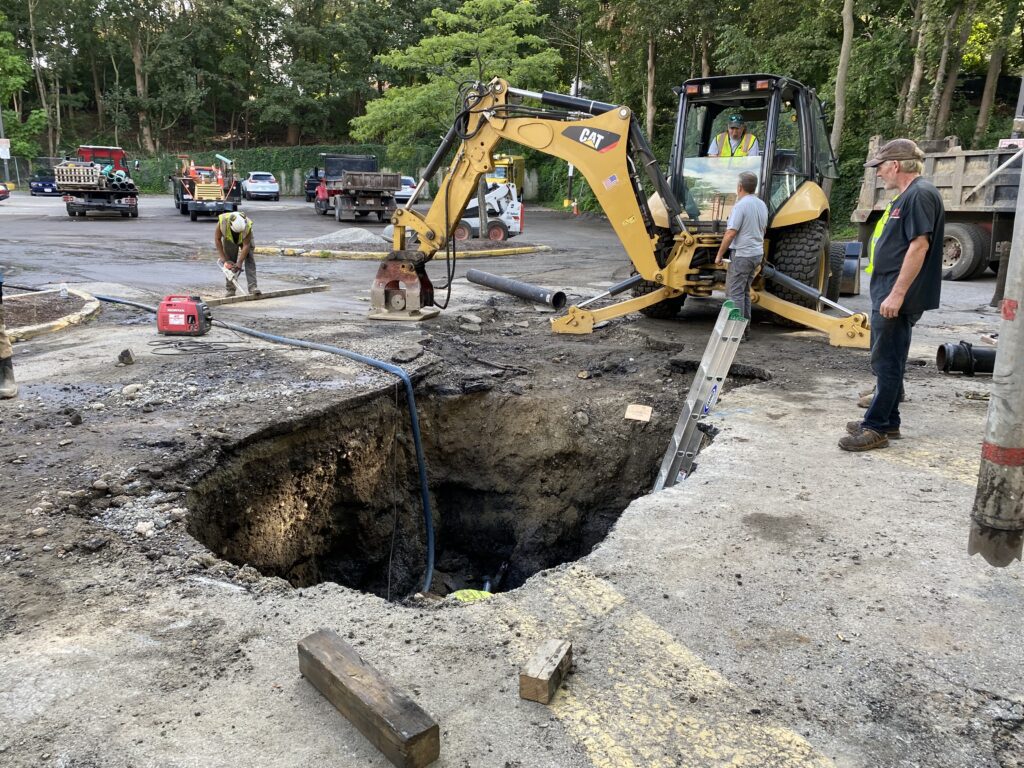
Beyond Compliance: Building a Better Excavation Process

The strongest excavation programs don’t treat Dig Safe as a paperwork requirement.
They treat underground utility protection as a process.
That process can be summarized as:
Plan → Premark → Notify → Verify → Locate → Daylight → Protect → Excavate → Document → Communicate
Each step addresses a different part of the underground utility risk.
For contractors, this can mean better coordination between the operator, superintendent, utility representatives, and project manager.
With developers and property managers, it can mean fewer surprises during construction.
For municipalities, it can help create a more predictable approach to work around existing infrastructure.
When Vacuum Excavation Makes Sense
Vacuum excavation is particularly useful when the consequences of striking a utility are high or when the exact location of an underground facility needs to be confirmed before mechanical excavation.
Common applications include:
- Utility daylighting
- Utility crossings
- Potholing
- Test holes
- Gas and electrical utility exposure
- Commercial site development
- Municipal infrastructure projects
- Roadway work
- New utility installation
- Excavation around existing structures
- Congested underground utility corridors
The appropriate method depends on the project, utility owner requirements, soil conditions, excavation design, and applicable regulations.

Partnering With an Experienced Vacuum Excavation Contractor
Safe excavation requires more than locating utilities on a map.
It requires understanding how those utilities interact with the actual excavation.
Construction Solutions, Inc. provides vacuum excavation and vacuum truck services for contractors, developers, municipalities, commercial properties, and infrastructure-related projects throughout Massachusetts, Southern New Hampshire, and Southern Maine.
Our experience working around major utility infrastructure—including work supporting projects involving Eversource and National Grid—has reinforced the importance of careful utility exposure, communication, and site-specific excavation planning.
For projects where underground utilities are a concern, vacuum excavation can provide a practical way to expose and verify critical infrastructure before mechanical excavation proceeds.
Final Takeaway: Dig Safe is the Beginning
A Dig Safe ticket is an essential first step, but safe excavation doesn’t stop when the paint hits the ground.
Beyond the marks is where excavation planning matters most.
Understanding the excavation limits, identifying public and private utilities, respecting the tolerance zone, verifying critical facilities, daylighting utilities when appropriate, protecting exposed infrastructure, and maintaining clear communication can help reduce the risk of utility damage and costly project interruptions.
For municipalities, contractors, developers, and commercial property managers, an advanced utility-exposure strategy can become an important part of the overall construction plan.
When excavation gets close to critical underground infrastructure, knowing where the utility is marked is only the beginning. Knowing exactly where it is before you dig is the goal.
Related Resources
- Vacuum Excavation Services
- How Hydro Excavation Protects Utilities
- Hydro Excavation vs. Air Excavation
- Commercial Excavation & Site Work
- Environmental Remediation Resources
- Massachusetts Environmental Cleanup Process
- MassDEP Regulations for Excavation & Site Work

Planning excavation near existing underground utilities?
Construction Solutions, Inc. can help with vacuum excavation, utility daylighting, test holes, and controlled utility exposure throughout Massachusetts, Southern New Hampshire, and Southern Maine.