

Construction Safety & Expert Insights
Construction safety is one of the most important aspects of any residential, commercial, municipal, or industrial project. From excavation and trenching operations to confined space entry and utility protection, proper safety planning helps reduce risk, prevent injuries, protect infrastructure, and keep projects operating efficiently.
The Construction Solutions, Inc. safety resource hub is designed to provide contractors, property owners, developers, facility managers, and construction professionals with educational information related to construction site safety, excavation safety standards, trenching protection, utility damage prevention, and industry best practices throughout Massachusetts and New England.
As new safety standards, construction technologies, and site challenges continue to evolve, staying informed is critical. This resource center is continually updated with new articles, field insights, and practical guidance covering topics such as:
- Excavation and trenching safety
- Confined space entry
- Soil conditions and trench collapse risks
- Utility locating and hydro excavation
- OSHA safety standards
- Construction planning and hazard awareness
- Worker protection and jobsite compliance
Whether managing a commercial development project, municipal utility work, residential excavation, or underground infrastructure installation, proactive safety planning plays a major role in successful project execution.




Excavation Safety
Excavation work remains one of the highest-risk activities in the construction industry. Underground utilities, unstable soil conditions, groundwater intrusion, heavy equipment operations, and trench collapse hazards all contribute to serious safety concerns if projects are not properly planned and managed.
Excavation safety begins long before digging starts. Site evaluations, utility locating, soil analysis, erosion control planning, and proper trench protection systems are essential for maintaining safe working conditions and protecting both workers and surrounding infrastructure.
Important excavation safety considerations include:
- Identifying underground utilities before excavation
- Understanding soil classification and stability
- Managing groundwater and drainage conditions
- Using trench protection systems when required
- Maintaining safe equipment operation zones
- Controlling site access and traffic
- Preventing cave-ins and collapses
- Following OSHA excavation safety standards
Modern excavation methods such as hydro excavation and vacuum excavation are also helping reduce risks associated with mechanical digging around buried infrastructure. These technologies improve precision while minimizing utility strikes and ground disturbance.
As excavation projects vary significantly depending on site conditions, weather, soil composition, and project scope, safety procedures must be tailored to the specific environment and work activity being performed.

Massachusetts Construction Worker Safety
Construction projects throughout Massachusetts face unique safety challenges due to changing weather conditions, aging infrastructure, dense urban development, and strict state and federal safety requirements.
Worker safety involves more than simply wearing personal protective equipment. Effective jobsite safety programs require ongoing hazard identification, site communication, employee training, equipment inspections, and compliance with OSHA regulations and local safety standards.
Some of the most common construction safety concerns in Massachusetts include:
- Trenching and excavation hazards
- Utility strike prevention
- Fall protection requirements
- Heavy equipment operation
- Confined space entry
- Winter weather and freeze-thaw conditions
- Traffic control in active work zones
- Site access limitations in urban areas
Massachusetts construction sites often encounter seasonal weather challenges that can rapidly affect jobsite conditions. Snow, ice, heavy rainfall, and fluctuating temperatures can increase slip hazards, destabilize excavation areas, and impact equipment safety.
Maintaining a safe construction environment requires coordination between contractors, subcontractors, property owners, utility companies, and safety personnel. Strong communication and consistent safety procedures help minimize risk while improving project efficiency and long-term performance.
Trenching Safety and Soil Protection
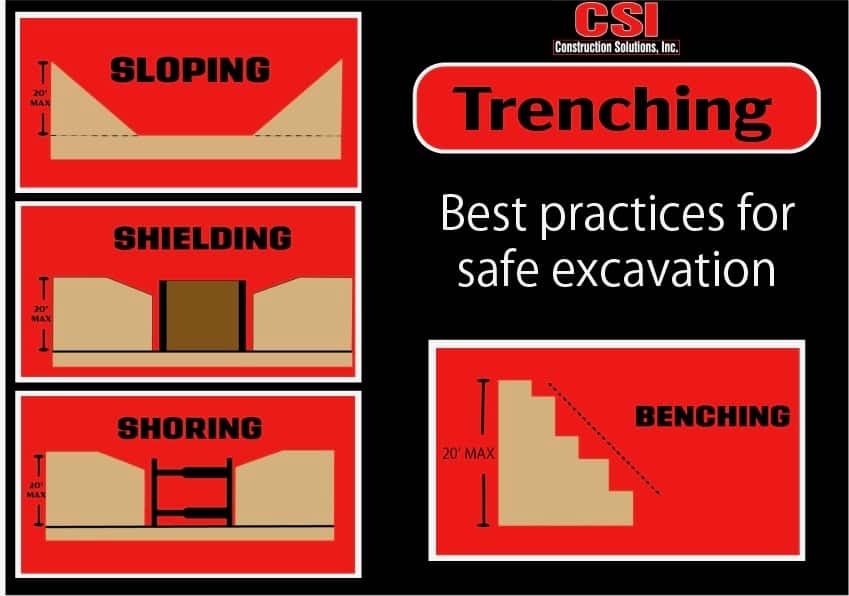
Trenching operations require specialized safety procedures due to the risk of trench collapse, falling materials, underground utility strikes, and hazardous atmospheres. Even relatively shallow trenches can become extremely dangerous if proper protective systems are not in place.
One of the most important factors in trench safety is understanding soil conditions. Different soil types react differently under pressure, moisture exposure, and vibration. Saturated soils, loose fill, and unstable ground conditions significantly increase the risk of trench failure.
Key trenching safety measures include:
- Proper soil classification
- Trench box and shoring systems
- Safe spoil pile placement
- Access and egress requirements
- Daily trench inspections
- Utility locating procedures
- Water management and dewatering
- Monitoring for changing site conditions

Protective systems must be selected based on trench depth, soil conditions, nearby structures, equipment loads, and groundwater presence. No two trenching projects are exactly alike, which is why trench safety planning must remain site-specific.
Proper trench safety protects workers, nearby structures, underground infrastructure, and the overall success of the construction project.
Frequently Asked Questions
Construction safety helps prevent injuries, equipment damage, project delays, utility strikes, and costly regulatory violations. A strong safety program improves both worker protection and project efficiency. For a more detailed explanation, view our guide, “Top Safety Standards Every Contractor Should Follow.”
Common hazards include falls, trench collapses, utility strikes, heavy equipment accidents, confined spaces, electrical hazards, and unsafe site conditions caused by weather or poor housekeeping.
Trench collapses can occur suddenly and may result in serious injury or fatality. Proper trench protection systems and soil evaluations are essential for safe excavation work. To learn more in-depth information regarding trench safety, please view our guide, “Why Soil Type Matters in Trenching & Excavation Projects.”
Hydro excavation uses pressurized water and vacuum systems to expose underground utilities with greater precision than mechanical digging, helping reduce the risk of utility damage. View our resource guide on “How Hydro Excavation Protects Utilities.”
Construction sites should be inspected regularly throughout the workday, especially when conditions change due to weather, excavation progress, equipment movement, or shifting soil conditions.
Soil type directly affects trench stability and collapse risk. Some soils remain stable while others become highly unstable when exposed to moisture or vibration. To learn more in-depth information regarding trench safety, please view our guide, “Why Soil Type Matters in Trenching & Excavation Projects.”
A confined space is an enclosed or partially enclosed area with limited entry and exit that may contain hazardous atmospheres or other safety risks requiring specialized procedures and monitoring. Read our guide, “Confined Space Entry in Construction: What is it and Why it Matters“, to learn more.
Locating underground utilities helps prevent strikes involving gas lines, electrical systems, water mains, telecommunications infrastructure, and sewer systems. View our guide “Vacuum Excavation in New England: The Complete Guide to Safe, Precise Digging,” for a more detained understanding on how to locate underground utilities.
Rain, snow, ice, wind, and temperature fluctuations can create unstable ground conditions, reduce visibility, increase slip hazards, and impact equipment performance.
Proactive safety planning helps reduce accidents, improve project coordination, protect workers and infrastructure, minimize downtime, and support regulatory compliance throughout the project lifecycle.
Arrive Safe. Work Safe. Leave Safe
Construction Solutions Inc, has been providing General Construction and Excavation for over 40 years with an impeccable safety record.
If you are looking for an experienced contractor that puts safety or workers and property owners in the forefront of every project, give is a call.
Phone: 978-388-7900
Serving Massachusetts, Southern New Hampshire & Southern Maine
Massachusetts – Essex County, Middlesex County, Suffolk County, Norfolk County
New Hampshire – Rockingham County, Hillsboro County
Maine – York County