
Table of contents
- Environmental Remediation in New England: The Hidden Risk Beneath Your Building
- What Is a Sub-Slab Depressurization System?
- How is a Sub-Slab Depressurization System Installed?
- How Does An SSD Prevent Vapor Intrusion?
- When Do You Need an SSD System?
- Why Trust a Local Contractor?
- Final Thoughts: SSD Systems as Part of a Smart Site Strategy
- For Environmental Remediation

Environmental Remediation in New England: The Hidden Risk Beneath Your Building
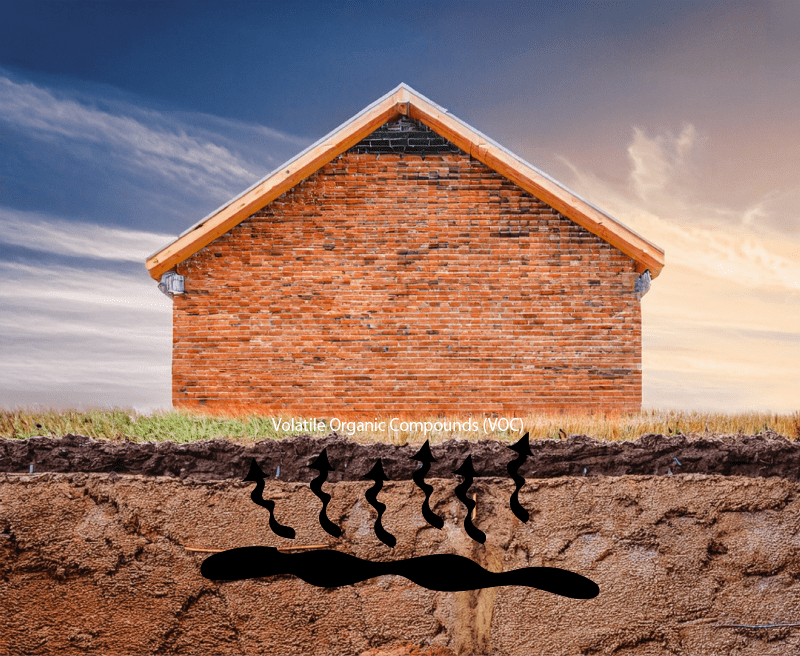
If you’re a property owner, developer, or facilities manager, you may already know that certain commercial sites sit on or near contaminated soils or volatile organic compounds (VOCs) found in the groundwater or soil.
VOCs, such as solvents, petroleum, volatile organics, methane and/or radon are environmental hazards. These hazards can slowly migrate upward — through the very foundation of your building, contaminating the air in the building.
Vapor intrusions are hazardous to humans with long term exposure. Radon Gas, which is a common byproduct of uranium breaking down in soils, causing lung cancer in over 21,000 Americans annually.
Other common contaminates such as benzene, trichloroethylene and naphthalene, can penetrate your buildings foundation putting occupants at risk of cancers, birth defects and more.
That’s where Sub-Slab Depressurization (SSD) systems come in.
What Is a Sub-Slab Depressurization System?

A Sub-Slab Depressurization (SSD) system is an active or passive ventilation system that helps prevent VOCs from entering the building.
It’s designed to:
- Capture harmful vapors like radon, petroleum hydrocarbons, or chlorinated solvents
- Prevent vapor intrusion into occupied spaces
- Redirect contaminated air away from the building, venting it safely outdoors
Think of it like a home radon mitigation system — but with broader applications for industrial, office, or retail buildings that may be affected by legacy contamination.
How is a Sub-Slab Depressurization System Installed?
- Core drilling beneath the slab is done in order to install extraction pipes
- Piping network is then installed to collect soil gas
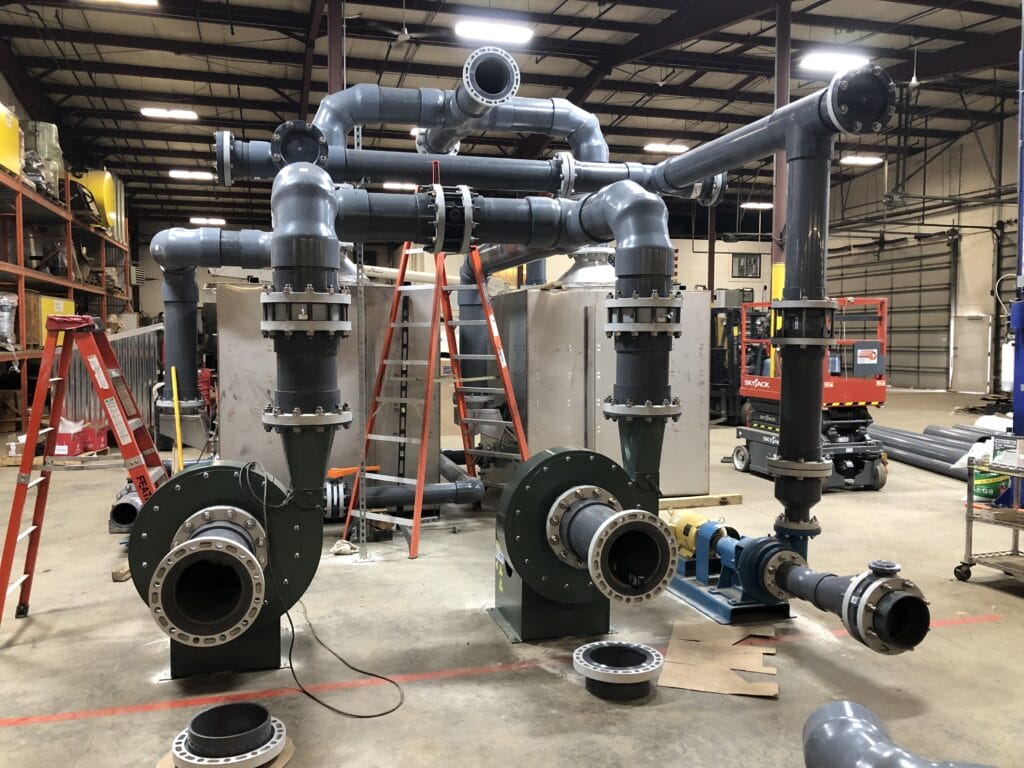
- A fan system is installed that reverses the air flow creating a negative pressure, which helps prevent the vapors from intruding into the building.
- The vapors are then directed outside through a series of discharge pipes
- Sealing floor penetrations and foundation cracks
- System monitoring ports to allow pressure and airflow testing by professionals
- The system requires continuous operation to be effective

How Does An SSD Prevent Vapor Intrusion?

The piping system installed through the slab floor is connected to the fan system.
When the system is on, the fan creates a vacuum with negative pressure beneath the slab. The vapors beneath the building are then directed outside the building, preventing intrusion.
This continuously ensures a constant negative pressure, which prevents the vapor intrusion. It is imperative that the system operates continuously, and all cracks in the foundation are sealed to be effective.
The system does not use a significant amount of energy. Back up power sources are recommended for power outages.
- Left depiction is general description of vapors that can be mitigated with charcoal filters – it is not intended as a design. Each system is dependent on the VOC and the site, designed by qualified engineers.
When Do You Need an SSD System?

Trusted Resource: Environmental Protection Agency
You may be required to install or retrofit an SSD system to protect building occupants if:
- Your site was once a gas station, dry cleaner, factory, or other hazmat-related property
- A Phase II Environmental Site Assessment (ESA) finds VOCs in the subsurface
- You’re building on a Brownfield site under an LSP’s guidance
- Tenants or lenders require a vapor mitigation plan to occupy or finance the building
Installation requires diagnostic testing to determine the number and location of extraction points.
In Massachusetts, SSD systems are frequently recommended or required by MassDEP during environmental cleanup projects.
Why Trust a Local Contractor?
Installing an SSD unit isn’t just technical — it’s regulatory.
You need a contractor who:
- Understands New England soil conditions (especially clay-rich or high water table sites)
- Coordinates with Licensed Site Professionals (LSPs)
- Can safely remove sub-slab material via excavation
- Has experience with tight-access commercial environments
Trusted Resources: Environmental Protection Agency

Final Thoughts: SSD Systems as Part of a Smart Site Strategy

If your commercial property involves environmental remediation, or if you’re concerned about indoor air quality and compliance, a Sub-Slab Depressurization System may be a requirement — or a smart precaution.
From initial excavation and soil vapor point installations to final vent stack routing and slab patching, Construction Solutions, Inc. can help you mitigate vapor risks without disrupting your schedule.
Let’s talk. We work directly with developers, LSPs, and commercial owners to install SSD systems quickly, cleanly, and code-compliantly.
For Environmental Remediation
in MA, NH, or ME