
Table of contents
- Massachusetts Stormwater Management Requirements: What Property Owners, Developers, and Contractors Need to Know
- What Is Stormwater Management?
- Why Stormwater Management is Important in Massachusetts
- Massachusetts Stormwater Standards
- Construction Site Stormwater Requirements
- Common Stormwater Management Systems
- Site Design Considerations for Stormwater Compliance
- The Role of Excavation and Site Development
- Common Stormwater Compliance Mistakes
- Stormwater Management and Sustainable Development
- Partner with Construction Solutions, Inc. for Stormwater Management and Site Development
- Frequently Asked Questions
- Experience Matters

Massachusetts Stormwater Management Requirements: What Property Owners, Developers, and Contractors Need to Know

Stormwater management has become one of the most important aspects of commercial and residential development throughout Massachusetts. Understanding Massachusetts stormwater management requirements is critical to maintaining compliance, protecting the environment, and avoiding costly project delays.
Improper stormwater management can lead to flooding, erosion, sedimentation, water quality violations, permit issues, and long-term property damage. For property owners and developers, failure to address stormwater requirements early in the planning process can result in expensive redesigns, enforcement actions, and construction delays.
This guide explains the key stormwater management requirements in Massachusetts and what developers should consider before breaking ground.
What Is Stormwater Management?
Stormwater refers to rainwater and snowmelt runoff that flows across developed surfaces such as:
- Parking lots
- Roadways
- Rooftops
- Sidewalks
- Industrial facilities
- Construction sites
As land is developed, natural areas that once absorbed rainfall are replaced with impervious surfaces that increase runoff volume and flow rates.
Without proper management, stormwater can:
- Cause localized flooding
- Erode slopes and streambanks
- Transport pollutants into waterways
- Damage infrastructure
- Overwhelm drainage systems
- Impact wetlands and protected resources
Massachusetts stormwater regulations are designed to reduce these impacts while protecting public safety and environmental resources.

Why Stormwater Management is Important in Massachusetts

Massachusetts has thousands of miles of rivers, streams, wetlands, coastal resources, and drinking water supplies that require protection from polluted runoff.
Many communities throughout Eastern Massachusetts, the North Shore, Merrimack Valley, and coastal regions experience additional challenges including:
- High groundwater tables
- Wetland proximity
- Coastal flooding concerns
- Dense urban development
- Aging drainage infrastructure
Municipalities such as Amesbury, Newburyport, Salisbury, West Newbury, Newbury, Haverhill, Andover, and surrounding communities often enforce strict drainage requirements during project review and permitting.
Proper stormwater management not only protects the environment but also helps ensure the long-term success of development projects.
Massachusetts Stormwater Standards
The Massachusetts Department of Environmental Protection (MassDEP) has established Stormwater Management Standards that apply to many development projects throughout the Commonwealth.
These standards focus on:
Protecting Water Quality
Stormwater systems must be designed to remove pollutants before runoff enters waterways, wetlands, or groundwater resources.
Managing Runoff Volume
Development projects should minimize increases in runoff volume caused by impervious surfaces.
Reducing Peak Flow Rates
Drainage systems must help prevent downstream flooding by controlling runoff discharge rates.
Protecting Groundwater Recharge
Where feasible, projects should promote infiltration and groundwater replenishment.
Preventing Erosion and Sedimentation
Construction activities must include measures to control soil erosion and prevent sediment from leaving the site.
Meeting these requirements often involves a combination of grading, drainage infrastructure, erosion controls, and engineered stormwater management systems.
Construction Site Stormwater Requirements
One of the most critical phases of stormwater management occurs during construction.
Land disturbance activities can generate significant sediment runoff if proper controls are not installed and maintained.
Construction sites typically require:
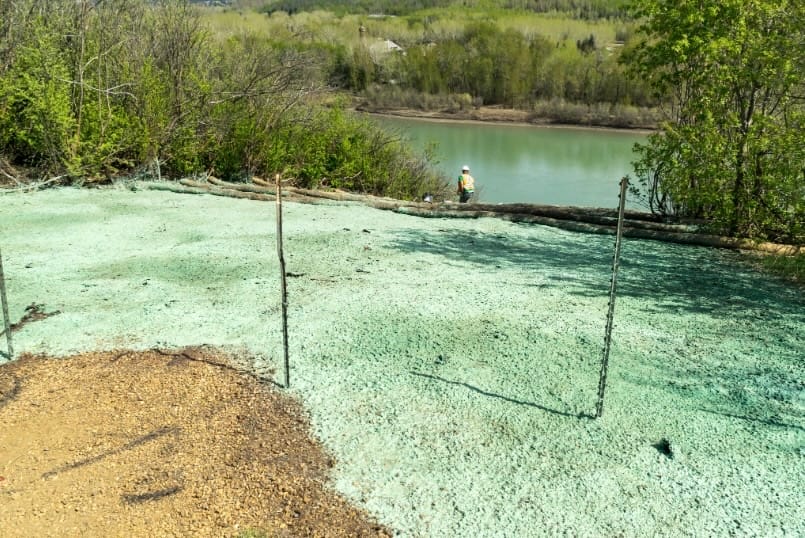
Erosion Control Measures
Common erosion control practices include:
- Silt fencing
- Compost filter socks
- Sediment barriers
- Erosion control blankets
- Temporary seeding
- Mulching
Sediment Control Measures
Sediment control systems help prevent soil from leaving the project site.
Examples include:
- Sediment basins
- Check dams
- Inlet protection
- Stabilized construction entrances
- Temporary sediment traps
Site Inspections
Stormwater controls must be inspected regularly and maintained throughout the construction process.
Failure to maintain erosion controls is one of the most common causes of stormwater violations on construction sites.

Common Stormwater Management Systems
Every property is unique, requiring site-specific drainage solutions.
Some of the most common stormwater management systems used throughout Massachusetts include:
Detention Basins
Detention basins temporarily store runoff and slowly release it to reduce downstream flooding.
Retention Basins
Retention systems hold stormwater and allow infiltration or evaporation to occur over time.
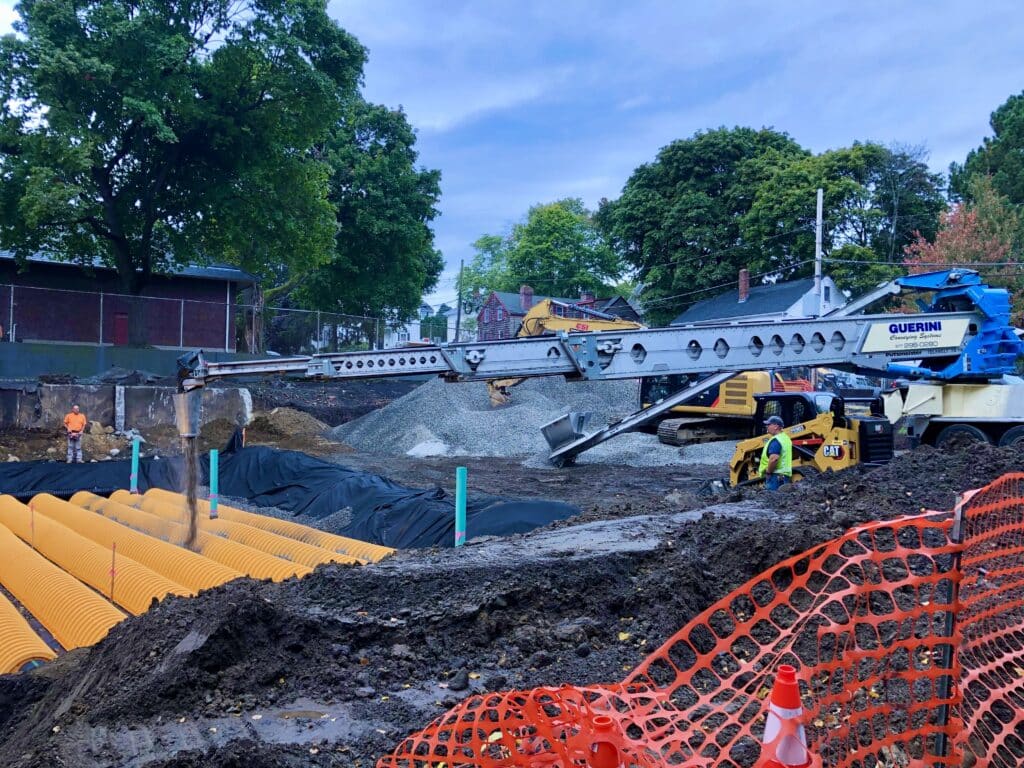
Underground Infiltration Systems
These systems store runoff below ground while promoting groundwater recharge.
Bioretention Areas
Often called rain gardens, these systems use engineered soils and vegetation to filter runoff.
Infiltration Basins
Designed to recharge groundwater while reducing runoff volumes.
Stormwater Chambers
Underground chamber systems provide storage beneath parking lots and developed areas where space is limited.
The appropriate solution depends on site conditions, soil characteristics, groundwater levels, and project requirements.
Site Design Considerations for Stormwater Compliance
Stormwater management should be integrated into project planning from the earliest stages.
Important considerations include:
Existing Topography
Natural drainage patterns significantly influence stormwater design.
Soil Conditions
Permeability and infiltration rates determine whether infiltration practices are feasible.
Groundwater Elevations
High groundwater can limit certain drainage solutions.
Wetlands and Resource Areas
Protected environmental resources often require additional permitting and setbacks.
Future Maintenance Requirements
Stormwater systems require ongoing maintenance to remain effective and compliant.
Addressing these factors early can reduce project costs and improve long-term performance.
The Role of Excavation and Site Development
Stormwater management begins with proper site preparation.
Excavation contractors play a critical role in:
- Rough grading
- Site balancing
- Utility installation
- Drainage system construction
- Detention basin excavation
- Infiltration system installation
- Erosion control implementation
Poor grading practices can create drainage issues that persist long after construction is complete.
Experienced site development contractors understand how earthwork, utilities, drainage, and stormwater infrastructure must work together to achieve compliance.

Common Stormwater Compliance Mistakes

Many project delays and violations result from preventable mistakes.
Some of the most common include:
Waiting Too Long to Address Stormwater Requirements
Stormwater planning should begin during project design, not after permitting starts.
Inadequate Site Investigations
Unknown soil conditions and groundwater elevations can significantly impact drainage designs.
Poor Erosion Control Maintenance
Installing controls is only the first step. Regular inspection and maintenance are equally important.
Improper Construction Sequencing
Stormwater systems should be installed according to project phasing requirements.
Ignoring Long-Term Maintenance
Stormwater infrastructure requires ongoing maintenance to remain functional and compliant.
Avoiding these issues can save considerable time and money throughout a project’s lifecycle.
Stormwater Management and Sustainable Development
Modern stormwater regulations increasingly emphasize sustainability and environmental stewardship.
Effective stormwater systems can:
- Improve water quality
- Reduce flooding risks
- Protect wetlands
- Enhance groundwater recharge
- Improve site aesthetics
- Increase property value
- Support regulatory compliance
Developers who incorporate sustainable stormwater solutions often benefit from improved project performance and reduced long-term maintenance costs.
Partner with Construction Solutions, Inc. for Stormwater Management and Site Development
Successful stormwater management requires careful planning, quality construction, and experienced site development professionals.
Construction Solutions, Inc. provides excavation, grading, drainage installation, stormwater management construction, utility installation, environmental remediation, and commercial site development services throughout Massachusetts, Southern New Hampshire, and Southern Maine.
Our team works closely with property owners, developers, engineers, municipalities, and general contractors to construct stormwater management systems that support compliance, improve site performance, and protect valuable environmental resources.
Whether you’re developing a commercial property, expanding an industrial facility, constructing a municipal project, or preparing a residential development, CSI has the experience and equipment necessary to help your project succeed.
Frequently Asked Questions
Many commercial, industrial, municipal, and residential developments that disturb land or create impervious surfaces must address stormwater management requirements during permitting and construction.
Stormwater systems help control runoff, reduce flooding, protect water quality, prevent erosion, and support groundwater recharge.
Property owners are typically responsible for ongoing inspection, maintenance, and repairs of stormwater infrastructure after construction is complete.
Poor drainage can lead to flooding, pavement failures, foundation damage, erosion, regulatory violations, and increased maintenance costs. We offer valuable resources for property owners on our “Foundations & Erosion Control Resource hub.”
Stormwater planning should begin during the earliest phases of project design to avoid permitting delays and costly redesigns later in the project lifecycle.
Experience Matters
Contact Construction Solutions, Inc. today to discuss your site development and stormwater management needs.
Call: 978-388-7900