
Table of contents

Coastal Property Comes With a View — and a Responsibility

Your seawall is the first line of defense against erosion, storm surge, and property damage.
But over time, even the strongest seawalls fail — and ignoring early warning signs can lead to costly repairs, liability risks, and environmental issues.
Here’s what you need to know if your wall is giving way.
Causes of Seawall Failure
Understanding what causes seawall failure helps you make better decisions about repair or replacement:
- Age and Material Breakdown – Concrete and steel degrade over time due to saltwater exposure.
- Improper Drainage – Without weep holes or proper venting, water pressure builds behind the wall.
- Scour and Erosion – Tidal action and wave energy can eat away at the base or footing of a wall, damaging the structural integrity of the
- Design or Construction – Older seawalls may not meet today’s structural or environmental standards.
- Climate Change. – Rising sea levels and increased storm intensities and frequency
- Coastal Storms – Nor’easters and other coastal storms cause damage with strong currents and high waves

Signs Your Seawall May Be Failing
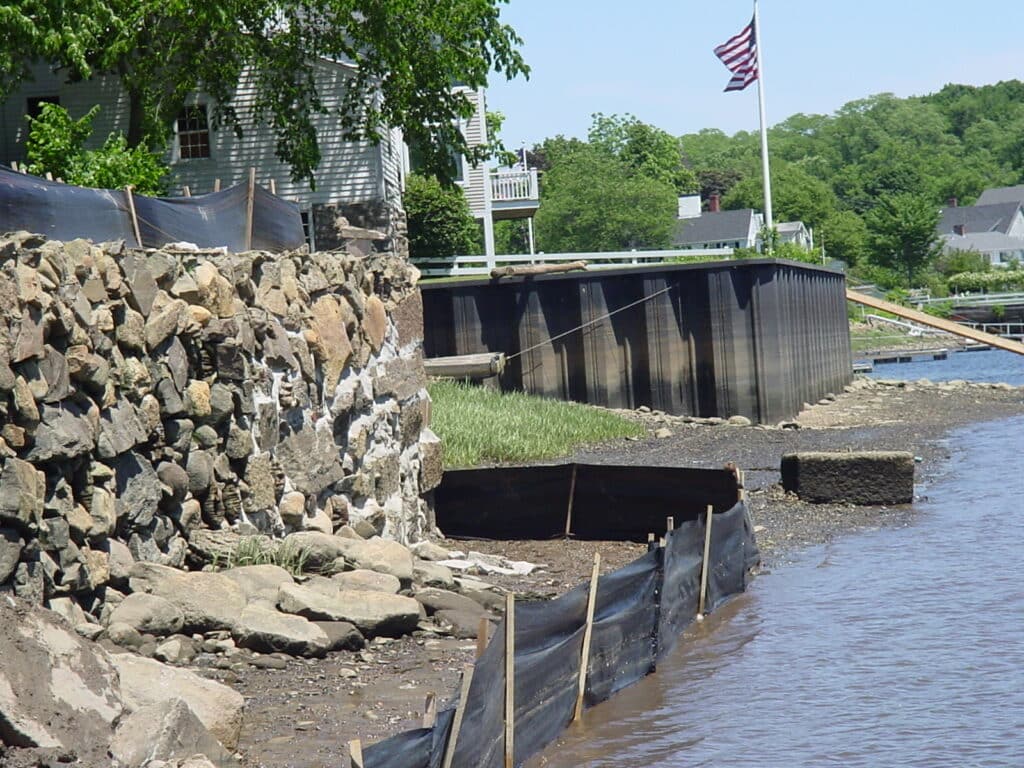
- Cracks in concrete or leaning sections
- Sinkholes forming behind the wall
- Rusted rebar or exposed tie-backs
- Piling separation or cap movement
- Water pooling where it shouldn’t
- Loss of backfill or erosion behind the structure
Pro Tip: If you see these signs, don’t delay. A structurally compromised seawall can fail rapidly during the next storm tide or nor’easter.
What are the consequences of failure
- Increased risk of flooding – a failure to a seawall allows water to intrude in an area that was Previously protected
- Property damage – homes, businesses or infrastructure can be destroyed or damaged from erosion or flooding
- Erosion to beaches and shorelines – seawall failure can accelerate the erosion process to beaches and coastlines
- Threats to public safety– damage and flooding can damage infrastructure

Replacement Options: What Are Your Choices?
1. Cast-in-Place Concrete Walls
Ideal for commercial applications, marinas, or high-traffic shorelines. Durable and long-lasting, resists rot and corrosion
2. Sheet Pile Walls (Steel, Vinyl, or Composite)
Popular for residential use or tight spaces. Driven deep and often reinforced with tie-backs.
3. Reinforced Riprap or Hybrid Systems
Combines armor stone and structural retaining elements for a natural look with engineered strength.
Choosing the best system for your property should be based on soil type, tide exposure, use case, and permitting requirements.

What’s Involved in Replacing a Seawall?

- Site Evaluation & Engineering – Assess existing conditions, utilities, soil stability, and water exposure.
- Identify the root cause of the failure – soil erosion, wave action, hydrostatic pressure.
- Permitting – Coastal projects require state and local environmental permits. We handle these for you.
- Demolition & Removal – Old seawall materials are removed safely and recycled or disposed per DEP guidelines.
- Excavation & Site Work – Precision excavation
- New Wall Installation – Materials are installed to spec and tied into land-based drainage systems.
- Backfill, Grading & Final Finish – We restore the site and provide erosion control measures like filter fabric and native plantings.
Why Trust Construction Solutions, Inc.?
We bring years of coastal construction experience and a deep understanding of permitting, tidal scheduling, and marine safety protocols.
- Licensed, insured, and local
- Advanced excavation, hydro vac, and grading equipment
- Serving coastal commercial and residential properties across Eastern MA, Southern NH & ME
- Start-to-finish project management, including coordination with engineers and environmental consultants
Don’t Wait Until It Collapses
A failing seawall won’t fix itself. Early replacement can save property, money, and stress.
