Table of contents
- Exploring Accessory Dwelling Units
- What Is an Accessory Dwelling Unit (ADU)?
- Why ADUs Are Gaining Popularity in New England
- Key Factors to Determine If an ADU Is Right for Your Property
- Benefits of Building an ADU
- Potential Challenges to Consider
- The Importance of Pre-Construction Planning
- Is an ADU Worth It for You?
- Thinking About an ADU? Start With the Site
- Massachusetts ADU Law – What Homeowners Should Know
- Local ADU Zoning – Greater Newburyport Area
- West Newbury, MA – ADU Zoning Snapshot
- Newburyport, MA – ADU Zoning Snapshot
- Byfield (Town of Newbury), MA – ADU Zoning Snapshot
- Request a Site Evaluation

Exploring Accessory Dwelling Units
Accessory Dwelling Units (ADUs) are becoming increasingly popular across New England, especially in Massachusetts, New Hampshire, and Maine.
Whether you’re looking to generate rental income, house a family member, or increase your property’s value, an ADU can be a smart investment — but it’s not the right solution for every property.
Before you move forward, it’s important to understand zoning, site conditions, costs, and long-term implications.
This guide walks you through what an ADU is, the benefits, challenges, and how to determine if your property is a good fit.
What Is an Accessory Dwelling Unit (ADU)?
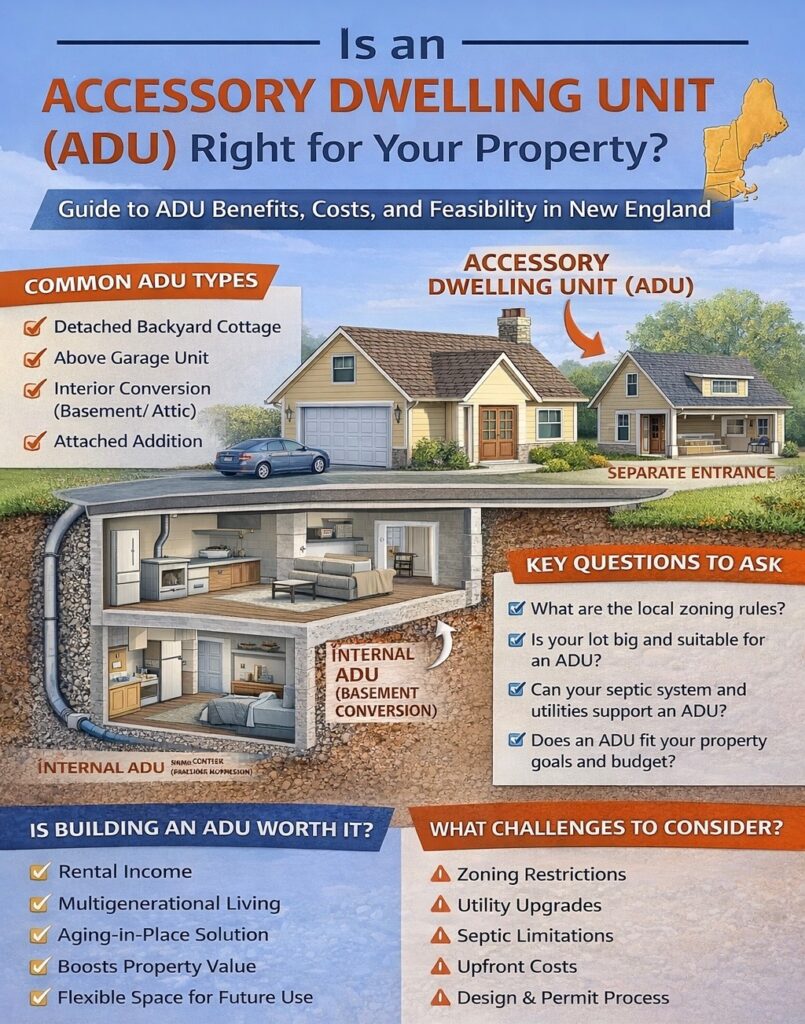
An ADU is a secondary residential living unit located on the same lot as a primary home. ADUs are sometimes referred to as:
- In-law apartments
- Granny flats
- Carriage houses
- Backyard cottages
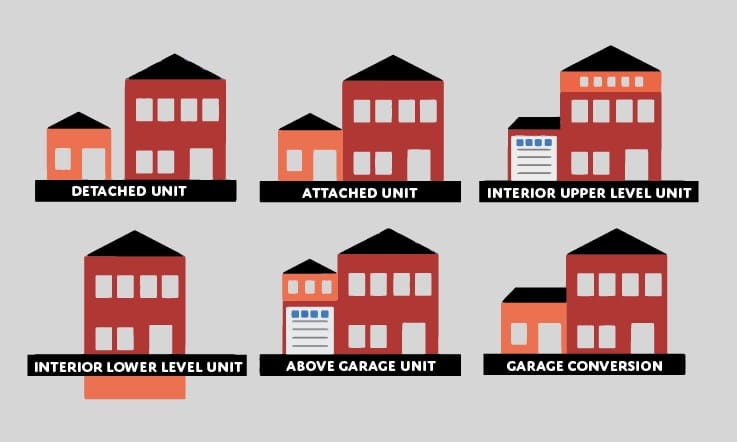
ADUs can be:
- Detached (standalone structure)
- Attached (addition to the main home)
- Interior (basement or attic conversion)
- Above garages
They typically include a kitchen, bathroom, living space, and a separate entrance.
Why ADUs Are Gaining Popularity in New England

Housing shortages, rising rents, and evolving zoning laws have made ADUs an attractive option for many homeowners.
Common reasons homeowners build ADUs:
- Rental income
- Multigenerational living
- Aging-in-place solutions
- Housing adult children
- Increasing property value
- Flexibility for future use
Massachusetts, in particular, has expanded ADU-friendly zoning in many communities, making it easier to build than ever before — though regulations still vary by town.
Key Factors to Determine If an ADU Is Right for Your Property
1. Zoning and Local Regulations
Every municipality has its own ADU rules. Key questions include:
- Are ADUs allowed by right or by special permit?
- Maximum size restrictions
- Parking requirements
- Owner-occupancy rules
- Setbacks and lot coverage limits
Working with a contractor familiar with local permitting and zoning boards can save months of delays.
2. Lot Size and Site Conditions
Even if zoning allows an ADU, your property must physically support it.
Important site considerations:
- Available buildable area
- Setbacks from property lines
- Tree removal or wetlands
- Soil conditions and drainage
- Existing utilities and access
In New England, ledge, high groundwater, and tight lots are common challenges that require experienced site work and excavation planning.
3. Utilities and/or Septic System
Many older homes were not designed to support additional dwelling units.
You may need:
- Septic system upgrade or replacement
- Title 5 compliance review
- Water service upgrade
- Separate electric meters
- Drainage improvements
These infrastructure costs can significantly impact your budget if not evaluated early.
4. Construction Costs and Budget
ADU costs vary widely depending on type and complexity.
Typical cost factors include:
- Site work and excavation
- Foundation type
- Utility upgrades
- Design and engineering
- Permit and impact fees
- Interior finishes
Learn more about excavation & site development
A detached ADU generally costs more than a conversion, but may offer better privacy and rental appeal.
5. Intended Use and Long-Term Goals
Ask yourself:
- Will this be a rental or family housing?
- Short-term or long-term use?
- Will it affect resale value?
- Do you plan to age in place?
An ADU should support your long-term property strategy, not just immediate needs.


Benefits of Building an ADU

- Generates rental income
- Increases property value
- Adds flexible living space
- Supports multigenerational living
- Maximizes land use
- May qualify for favorable financing
- When properly planned and constructed, ADUs can deliver strong returns.
Potential Challenges to Consider
- Zoning restrictions
- Utility upgrades
- Septic limitations
- Neighborhood opposition
- Construction disruption
- Upfront costs
These challenges are manageable with the right planning and professional guidance.

The Importance of Pre-Construction Planning

The most successful ADU projects begin with site evaluation and feasibility analysis.
This includes:
- Zoning review
- Site walk
- Soil and drainage assessment
- Utility evaluation
- Preliminary budget planning
Early planning helps avoid costly redesigns and permitting delays.
Is an ADU Worth It for You?
An ADU can be an excellent investment — if your property, budget, and goals align.
Properties with adequate lot size, favorable zoning, and existing infrastructure are ideal candidates.
If you’re unsure, consulting with a contractor experienced in New England site work, excavation, and residential construction is the best first step.
Learn more about residential construction:

Thinking About an ADU? Start With the Site

Before drawings and permits, it’s critical to understand what your land can support.
Proper excavation, drainage, utilities, and foundation work are the backbone of a successful ADU project.
If you’re considering an accessory dwelling unit, a site evaluation can help you determine feasibility, costs, and next steps — before you invest time and money into design.
Massachusetts ADU Law – What Homeowners Should Know
As of recent Massachusetts zoning reforms, many municipalities now allow Accessory Dwelling Units by right in single-family zoning districts, subject to reasonable local regulations.
This has made ADUs more accessible — but town-specific rules still apply.
✔ Always confirm requirements with your local building department or zoning board.
Mass ADU regulations:

Local ADU Zoning – Greater Newburyport Area
Amesbury, MA – ADU Zoning Snapshot

Amesbury generally supports accessory dwelling units, particularly interior and attached ADUs, as a way to increase housing options.
Common considerations in Amesbury:
- ADUs often allowed by right within existing homes
- Detached ADUs may require special permit or site plan review
- Typical size limits apply (often tied to primary dwelling size)
- One additional parking space may be required
- Septic properties must meet Title 5 bedroom capacity
Pro Tip: Properties near wetlands or conservation areas may require Conservation Commission approval.
West Newbury, MA – ADU Zoning Snapshot
West Newbury is more rural and often has larger lots, but septic capacity and groundwater conditions are common limiting factors.
What to know in West Newbury:
- ADUs may require a special permit
- Detached ADUs are more closely reviewed
- Septic system upgrades are frequently required
- Lot coverage and setback compliance is critical
- Owner-occupancy requirements are common
Pro Tip: Early site evaluation is essential to avoid septic or drainage surprises.

Newburyport, MA – ADU Zoning Snapshot

Newburyport encourages ADUs but applies stricter review standards, especially in historic and coastal areas.
Key factors in Newburyport:
- ADUs often allowed by right or with site plan review
- Historic District Commission approval may be required
- Floodplain and coastal zone compliance is common
- Parking requirements vary by neighborhood
- Detached ADUs may face height and footprint limits
Pro Tip: Design compatibility is especially important in historic districts.
Byfield (Town of Newbury), MA – ADU Zoning Snapshot
Byfield properties often offer space for ADUs, but environmental constraints play a major role.
Typical Byfield ADU considerations:
- ADUs may require special permit approval
- Septic system capacity is often the deciding factor
- Wetlands and buffer zones are common
- Larger lots help, but buildable area may be limited
- Driveway access and fire department requirements apply
Pro Tip: Soil testing and septic feasibility studies are highly recommended.
Learn more about ADU and zoning regulations in New England